

Mouth Guards for Combat Sports: The Ultimate 2026 Buying Guide
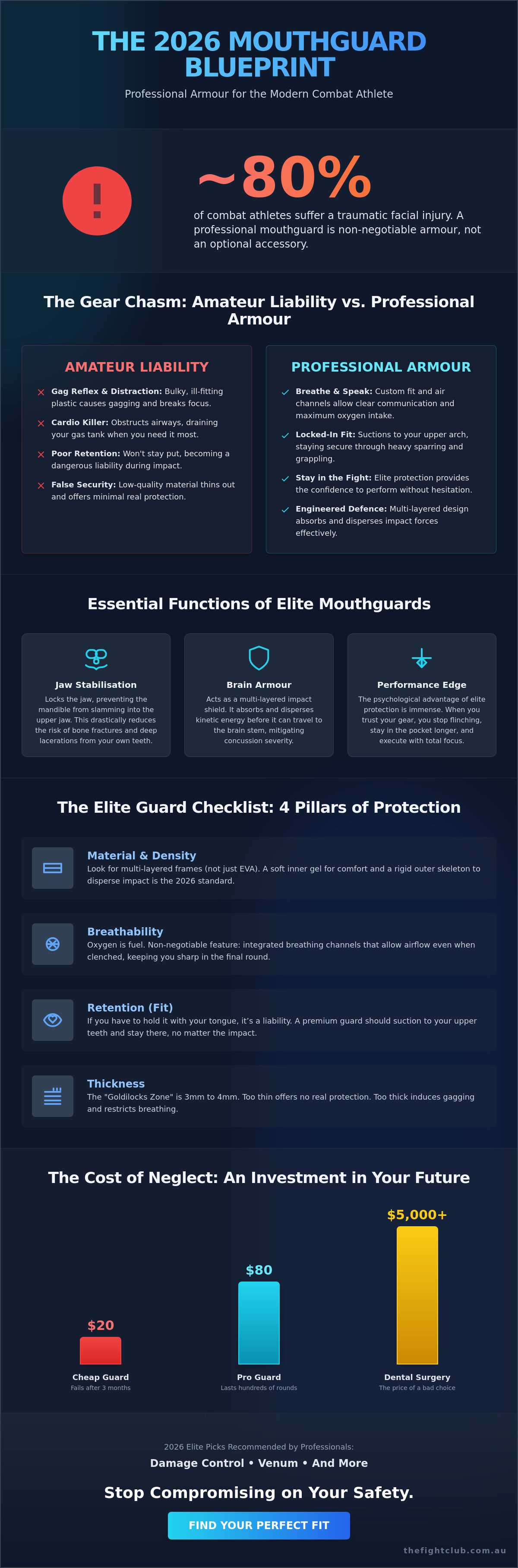
Nearly 80% of combat athletes have suffered a traumatic facial injury requiring medical intervention by May 2026. It is a sobering reality. Your teeth are targets. Your brain is the prize. Most fighters settle for cheap, bulky mouth guards that cause gagging and kill their cardio. You know the feeling of gasping for air through a slab of low-quality plastic that won't stay put. It is distracting. It is dangerous. It is amateur. You need gear that matches your intensity without the ego.
You deserve professional-grade armour that lets you breathe, speak, and stay in the fight. We promise to show you how to choose elite protection with the 3mm minimum thickness required for heavy impact. This guide breaks down the latest 2026 tech in custom-fit and high-end boil-and-bite options like Damage Control. We will explore how to prioritise impact absorption and durability so you can focus on the technical battle, not your gear. Stop compromising on your safety and start training with the confidence of a professional who values their health as much as their hustle.
Key Takeaways
- Stop settling for dental shields; learn how jaw stabilisation prevents fractures and lacerations.
- Identify multi-layered materials and breathing channels to stay oxygenated during high-intensity scrambles.
- Match your mouth guards to your discipline, from boxing impact to MMA grappling security.
- Master the boil-and-bite process to avoid amateur mistakes like uneven moulding or biting through.
- Compare the 2026 elite picks, including Damage Control and Venum, to find your perfect fit.
Why a Professional Mouth Guard is Essential Gear for Every Fighter
Step into the gym. Hear the rhythm of the heavy bags. You aren't just here to sweat. You're here to evolve. But you can't evolve if you're sidelined by a preventable injury. Most fighters view mouth guards as an afterthought. They're wrong. A professional guard is a structural brace for your entire skull. It locks the jaw in place. It prevents the mandible from slamming into the upper jaw. Without this stabilisation, a clean hook doesn't just hurt. It shatters bone. It causes deep lacerations from your own teeth. You need gear that acts as a barrier between you and a surgeon's chair.
Think of it as brain armour. When a strike lands, kinetic energy looks for the path of least resistance. Usually, that path leads straight to your brain stem. A professional combat guard is a multi-layered impact shield. It absorbs and disperses force before it can rattle your consciousness. This isn't just about safety. It's about performance. There is a massive psychological edge that comes with elite protection. When you know your jaw is secure, you stop flinching. You stay in the pocket longer. You execute your combinations with total focus. Authenticity in training means preparing for the worst so you can perform your best. Exploring the history and types of mouthguards reveals how these tools shifted from basic rubber to the advanced skeletal support systems used today.
Dental Protection vs. Concussion Mitigation
A thick molar pad is your first line of defence. It absorbs vertical impact when you bite down during a strike. This prevents teeth-clashing, which is a primary cause of the "flash" knockouts seen in the cage. If your teeth aren't separated by high-density material, the vibration travels directly into the skull. Modern 2026 boil-and-bite technology has closed the gap with custom dental lab work. It ensures the material doesn't thin out during the moulding process. You get a consistent, dense layer of protection where your molars meet. This prevents the "rattled" feeling that ends fights prematurely.
The Cost of Neglect: Dental Surgery vs. Quality Gear
Check the math. You can invest in a top-tier guard now. Or you can pay thousands for dental reconstruction later. It is a simple choice. Cheap guards are a liability. They fail after three months of hard sparring. They deform. They thin out until you're basically biting on air. Professional-grade gear, like a Damage Control mouth guard, is built for the long haul. It maintains its integrity through hundreds of rounds. Don't let a budget piece of plastic be the reason your season ends early. Respect the craft. Respect your health. Stay in the fight.
Choosing the Right Protection: Key Features to Compare
Don't buy gear based on the colour or the logo. Buy it for the engineering. When you're mid-scramble, you shouldn't be thinking about your equipment. You need to think about the next move. High-performance mouth guards are defined by three core pillars: density, breathability, and retention. If your guard fails at one, it fails at all. You need a piece of kit that stays locked in place while you're gasping for air in the final minute of the round.
Material density is your primary shield. Traditional EVA is the baseline, but 2026 standards favour dual-core or multi-layered frames. These designs use a soft inner gel for comfort and a rigid outer skeleton to disperse impact. This architecture prevents the force of a knee or a hook from concentrating on a single tooth. According to American Dental Association guidelines, a proper fit is essential to maximise these protective properties. Without that structural integrity, you're just wearing a piece of decorative plastic.
Breathability is non-negotiable. Oxygen is fuel. If your guard blocks your airway, your gas tank hits zero in minutes. Look for integrated breathing channels. These small gaps allow air to flow even when your teeth are clenched. This feature is what separates a generic "boil and bite" from a professional combat tool. You can find these high-flow designs in our professional range, ensuring you stay sharp in the deep waters of the final round. Retention is the final piece of the puzzle. If you have to hold your guard in place with your tongue, it's a liability. A premium guard should suction to your upper arch and stay there, even if you're taking heavy fire.
Thickness and Impact Distribution
The "Goldilocks" zone for combat sports is usually between 3mm and 4mm. Too thin, and you're just wearing a plastic film. Too thick, and you'll gag. Strikers need frontal bumper zones to handle straight shots. Grapplers might prefer a slimmer profile that allows for clear communication. If you can't shout instructions to your corner or hear your coach through the plastic, your gear is working against you. Slim-fit designs are the standard for high-intensity training where talk is as important as technique.
Advanced Materials in 2026
The game has changed. Medical-grade polymers have replaced the stiff plastics of the past. Brands like Damage Control and Venum now utilise materials that offer superior custom-moulding capabilities. These polymers "remember" your dental profile better than basic rubbers. Hygiene is also a priority. Many premium guards now feature anti-microbial coatings. This prevents the buildup of bacteria in your gym bag, keeping your gear fresh and your health secure. Choose substance over flash. Every time.
Combat-Specific Requirements: Boxing, MMA, and BJJ
Generic equipment treats every impact as a flat variable. It isn't. A hook from a heavyweight boxer carries different energy than a knee in the Muay Thai clinch. Combat sports demand specialised mouth guards tailored to the unique violence of each discipline. In boxing, your priority is frontal impact and jaw-clench support. You spend the entire fight biting down to stabilise your skull. If your protection is too pliable, it will compress under the force of a clean cross, failing to separate your teeth and increasing the risk of a "flash" knockout. You need density that refuses to bottom out when the stakes are high.
Muay Thai introduces lateral threats that most standard guards ignore. Elbows and knees come from sharp, high angles during clinch work. This requires a guard with reinforced sidewalls to prevent lateral jaw displacement. Without this lateral support, a well-placed elbow can shift the mandible, leading to fractures or severe soft tissue damage. Authenticity on the mats means choosing gear that respects the specific mechanics of your sport. Don't step into the ring with a guard designed for a field sport. It won't hold up when the pressure is real and the strikes are coming from every direction. You need gear that is as gritty and resilient as your training partner.
Why MMA Fighters Need Multi-Sport Versatility
MMA is the ultimate test of your kit's retention. You are transitioning from explosive striking to high-intensity wrestling scrambles in a matter of seconds. This is where most mouth guards fail. If your protection drops the moment you open your mouth to gasp for air during a takedown defence, you are vulnerable to a redirected strike. You need a vacuum-like fit that stays locked to your upper arch regardless of your mouth position. For a deeper look at how to integrate your safety gear into a full professional setup, read our guide to professional combat gear. Consistency in your equipment allows you to focus on the transition, not your mouthpiece. Stay secure through every phase of the fight.
BJJ and the "Slim-Fit" Advantage
Grappling creates a different crisis: the need for oxygen. You aren't taking constant punches to the face, but you are fighting through long rolls and heavy pressure. A thick, bulky boxing guard is a hindrance here. It makes you gas out when you're trapped in the bottom of side control or defending a transition. Slim-line designs are the secret to surviving the mats. They prioritise a low profile for maximum air intake while still protecting your teeth from accidental knees during a scramble. While you're refining your grappling safety, ensure your uniform is up to the task by checking our BJJ Gi Guide. Efficiency is the key to longevity in the gym. Don't let your gear be the reason you tap early. Keep the intensity high and the ego low.
The Perfect Fit: How to Customise and Care for Your Guard
A professional guard is only as good as its fit. If it's loose, it's a liability. You need a vacuum seal, not a piece of plastic that rattles in your mouth. Timing is everything during the moulding phase. One second too long in the heat and you've ruined a high-quality piece of kit. One second too short and it won't take the shape of your teeth. Precision matters in the gym. It matters in your mouth guards too. Most fighters rush this process. They end up with mouth guards that make them gag or fall out during a scramble. Don't be that person. Spend the time to get it right.
Test your work with the gravity test. Open your mouth wide. If the guard stays locked to your upper teeth without your tongue holding it up, you've succeeded. If it drops, you've failed. A loose guard is dangerous. It can become a choking hazard or fail to stabilise your jaw when a shot lands. If you can't get a secure fit after two attempts, the material has likely reached its limit. Hygiene is the final pillar of maintenance. We call it keeping your gear "The Fight Club" clean. Rinse it after every session. Use a dedicated anti-bacterial cleaner once a week. Bacteria loves damp, dark spaces. Don't give it a home in your mouth.
Step-by-Step Moulding Process
Temperature control is the first hurdle. Boiling water can ruin premium polymers by making them too soft to hold a shape. Use water that has just come off the boil, but let it sit for thirty seconds first. Submerge the guard until the edges start to curl slightly. Use the tongue and finger technique to create the seal. Push your tongue against the back of the guard while using your fingers to press the outside against your gums. Perform the suction test by opening your mouth wide; if the guard stays locked to your upper teeth without help from your tongue, you've achieved a professional fit.
Long-Term Maintenance and When to Replace
The 6-month rule is the gold standard for active fighters. Over time, the material thins from constant clenching and impact. It loses the structural integrity required to disperse force. Look for bite-through spots or thinning around the molars. If you can see through the plastic, it's time to bin it. Storage is equally important. Use a vented case to allow for airflow. Never chuck your guard into the bottom of your gear bag next to a damp punching bag. The moisture will breed bacteria and degrade the polymer. Grab a fresh Damage Control mouth guard today to ensure your protection remains elite.
The Best Mouth Guards for Fighters in 2026: Our Top Picks
Selecting the right armour is a statement of intent. You've learned about the mechanics of impact and the necessity of a vacuum seal. Now, you need to choose the kit that actually delivers. Not all mouth guards are forged for the intensity of a professional gym. We have filtered through the options to bring you the elite picks for 2026. These tools are designed to protect your smile and your focus when the pressure is high and the strikes are heavy.
Pick your tier based on your training volume. High-performance gear isn't just about the logo. It is about the density of the frame and the quality of the gel liner. Whether you're a heavy hitter in the boxing ring or a specialist on the mats, your gear must match your hustle. Choose substance over flash. Every time.
Why Damage Control is the Pro Choice
Damage Control has earned its reputation as the gold standard for high-impact protection. These aren't just rubber shields. They are engineered skeletal supports. The extreme impact absorption found in the Damage Control collection is designed to handle the most violent collisions. They offer a custom-fit feel that rivals expensive dental lab work without the wait time. The designs reflect a no-nonsense fighter personality. If you want maximum density without the bulk, this is your destination. It is the choice for athletes who realise that second-best isn't an option when their health is on the line.
Venum: Style Meets Substance
Venum continues to dominate the combat world by blending iconic fighter aesthetics with genuine technical innovation. Their legacy of protection is well-documented in our Venum Australia guide. You have two primary paths here based on your training intensity:
- Venum Challenger: The reliable workhorse for daily sessions. It features a high-density rubber frame and a gel-fit liner that ensures comfort during long sparring rounds.
- Venum Predator: Built for the heavy hitters. This model uses an advanced multi-layer construction to disperse force across the entire jaw. It is the ultimate shield for Muay Thai and MMA.
Stay Protected and Stay in the Pocket
Your journey in combat sports is a marathon. Not a sprint. You now understand that elite mouth guards are more than plastic; they are essential tools for jaw stabilisation and impact distribution. You know how to distinguish between a bulky liability and a slim-fit shield that lets you breathe during a scramble. Don't let a single heavy hook end your season because you settled for inferior gear. Master the moulding process. Maintain your hygiene. Choose the armour that matches your discipline.
We are Australian owned and operated fight gear experts. As official stockists of Venum and Damage Control, we supply the authentic gear required for professional training. We provide fast national shipping across Australia to get you back on the mats without delay. Secure your smile and browse the full Mouth Guard collection here. Respect the craft. Protect your future. We'll see you in the gym.
Frequently Asked Questions
How long should a combat sports mouth guard last?
Replace your guard every six months if you are training at a high intensity. Even the best mouth guards lose their structural integrity over time as the polymer thins from constant clenching and impact. If you notice bite-through marks or the fit feels loose, bin it immediately. Don't wait for a dental injury to realise your gear has expired. Discipline in your kit maintenance is as vital as discipline in your technique.
Can I wear a mouth guard with braces for boxing or MMA?
You can wear protection with braces, but you must use a guard specifically engineered for orthodontics. Standard boil-and-bite models are a liability here; they can melt into your brackets and cause serious damage. Look for a non-mouldable silicone guard that provides a protective channel for your hardware while allowing for tooth movement. Consult your orthodontist before stepping into any high-impact sparring session to ensure your specific treatment is protected.
Is a custom-fit mouth guard worth the extra cost over boil-and-bite?
Custom-fit guards offer the best retention, but 2026 boil-and-bite technology has nearly closed the gap for most athletes. High-end models now use medical-grade polymers that provide a vacuum-like seal and superior impact distribution. If you are a professional competitor, the dental lab investment is justified for that final percentage of safety. For most dedicated strikers and grapplers, a premium mouldable guard provides elite protection without the massive price tag of a dentist-fitted unit.
Why does my mouth guard make me gag, and how can I fix it?
Gagging usually happens because the guard extends too far back toward your soft palate. It is a common issue with generic gear that hasn't been customised to your mouth's unique shape. Use a sharp pair of scissors to trim the back edges by a few millimetres, then smooth the edges with a lighter or hot water. A shorter, professional-profile guard keeps your airway open and your focus sharp during deep-water rounds.
Do I need a double mouth guard for heavy sparring?
Double mouth guards are rarely necessary and often hinder your performance. They offer more coverage but severely restrict your oxygen intake and your ability to shout instructions to your corner. A high-quality single guard combined with a proper jaw-clench provides sufficient protection for heavy sparring. Focus on a guard with a reinforced frontal bumper rather than a bulky double-sided model that kills your cardio and makes you gas out early.
How do I clean my mouth guard properly without damaging it?
Clean your guard with cold water and mild anti-bacterial soap after every single session. Never use boiling water for cleaning; it will warp the custom fit you worked hard to achieve. Use a soft toothbrush to gently remove any debris from the crevices where bacteria loves to hide. Store it in a vented case to prevent moisture buildup. Authentic fighters respect their gear as much as their training partners.
Can I remould my mouth guard if the fit is loose?
You can remould most premium guards if the fit becomes loose after a few months of use. Simply repeat the heating process, but be cautious not to overheat the material and ruin the polymer's density. Every time you remould, the material loses a small amount of its protective capability. If the fit doesn't lock after a second attempt, it is a sign that the material is spent and you need a fresh shield.
What is the difference between a $15 guard and a $50 guard?
The difference lies in the engineering and the quality of the impact shield. A $15 guard is typically a single layer of basic plastic that thins out the moment you bite down. A $50 guard, like those from Venum or Damage Control, features multi-layer frames and integrated breathing channels. You are paying for the ability to breathe under pressure and the certainty that your jaw won't bottom out when a heavy shot lands.