

Extending the Life of Your Fight Gear: The Fighter’s Maintenance Ritual (2026)
Your $250 gloves aren't failing because they're low quality. They're failing because you're treating them like garbage. You spend hours honing your technique, then throw your sweat-soaked kit into a dark gym bag to rot. It's a cycle that kills your performance and your wallet. We've all smelled that "death" scent in the gym. We've all felt the frustration of premium leather cracking or Velcro losing its grip mid-spar. Extending the life of your fight gear is the final round of your training. It is the difference between an amateur and a professional.
You work hard for your equipment. This guide promises to show you the professional maintenance habits that prevent gear rot, eliminate odours, and protect your investment. We will preview the ritual of using pH-neutral cleaners on Vylar leather and the benefits of G-Core antimicrobial linings that kill 99.9% of bacteria. Whether you're maintaining a Venum Elite Gi or refreshing your kit with free Australian shipping on orders of $180 or more, excluding bulky or heavy items, this is how you make gear last three years instead of six months. Stop neglecting your tools. Start respecting the craft.
Key Takeaways
- Master the professional habits essential for extending the life of your fight gear by stopping "gear rot" and acidic sweat corrosion before they start.
- Adopt the "Airflow First" rule for boxing gloves to eliminate trapped moisture and prevent the bacteria that cause permanent, foul odours.
- Preserve the structural integrity of BJJ Gis and rash guards by following a strict immediate-wash protocol and avoiding performance-killing fabric softeners.
- Execute a disciplined 5-minute post-session checklist to disinfect non-porous gear, ensuring your protective padding stays effective for years.
- Understand why premium materials like Vylar Engineered Leather found in the Hayabusa T3 offer superior durability compared to traditional animal hides.
The High Cost of Neglect: Why Fight Gear Fails
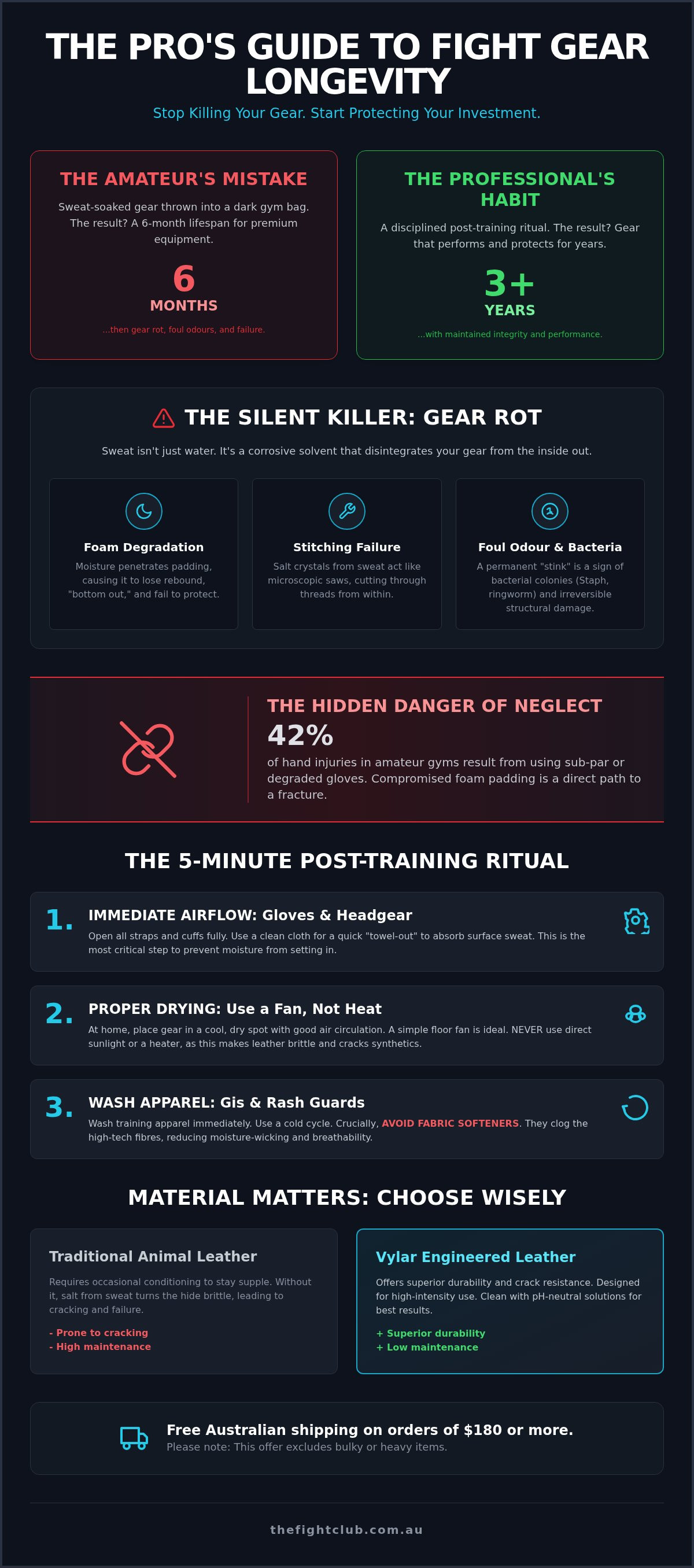
You don't just train in your gear. You destroy it. Every round of sparring or heavy bag work saturates your equipment in a corrosive cocktail of salt, urea, and bacteria. Neglecting your kit after the final bell isn't just lazy; it is expensive. Extending the life of your fight gear starts with understanding that sweat is a solvent. It eats through the internal linings of even the best equipment, leading to a process known as "gear rot."
Gear rot is the silent killer of premium combat equipment. It involves:
- Foam Degradation: Moisture penetrates the padding, causing high-density foam to lose its rebound and "bottom out."
- Stitching Failure: Salt deposits from sweat crystallise and sharpen. They act like microscopic saws, cutting through nylon threads from the inside.
- Structural Collapse: Once the internal layers are compromised, the gear loses its ability to disperse kinetic energy.
If your gloves have developed a permanent, foul odour, it is a warning sign. That scent isn't just a nuisance; it is the smell of your investment disintegrating. When the "stink" sets in, the structural integrity of the padding is usually already failing.
Bacteria: The Invisible Opponent
Staph, ringworm, and various fungal infections are the opponents you cannot see. They love the damp, dark vacuum of a zipped gym bag. Porous linings in standard sports equipment trap skin cells and organic matter, creating a perfect breeding ground. Masking the stench with a quick spray is a coward’s move. It does nothing to kill the bacteria. You are simply layering perfume over a biohazard. Authentic maintenance means drying the gear completely to stop the colony from forming. Extending the life of your fight gear requires a commitment to hygiene that matches your commitment to the mats.
Material Fatigue in Combat Sports
Surface wear is cosmetic. Internal structural collapse is dangerous. High-density impact foam is engineered to disperse force and protect your small joints. When salt crystals from dried sweat remain inside the padding, they act like sandpaper. Every strike grinds the foam into dust. This padding collapse is why old gloves feel thin and "punchy."
Using compromised gear is a fast track to the sidelines. Data from 2025 showed that 42% of hand injuries in amateur gyms resulted from using sub-par or degraded gloves. If you're using gear with collapsed foam, you're one heavy hook away from a fracture. Respect the tools that protect you. If your kit is too far gone, it's time for a refresh. We offer free Australian shipping on orders of $180 or more, though this excludes bulky or heavy items. Don't wait for an injury to upgrade your protection.
Boxing Glove Care: Drying and Deodorising for Longevity
The bell rings. You're spent. The first thing you want to do is dump your gear and hit the shower. Don't. Leaving your boxing gloves in a zipped gym bag overnight is a death sentence for the foam. It creates a stagnant, humid microclimate where bacteria thrive. If you're serious about extending the life of your fight gear, you must adopt the 'Airflow First' rule. Open the hook-and-loop straps completely. Pull the cuff back as far as it goes. You need to break the seal so air can actually reach the fingertips and thumb. For the most stubborn moisture, use cedar chips or desiccant inserts. These pull sweat from the thumb area, which is usually the first place to rot.
Moisture Management After Every Round
Start with the 'towel-out' technique. Take a clean, dry cloth and reach deep into the glove to soak up surface sweat immediately after your session. This prevents the salt from soaking into the deeper layers of padding. Once you're home, find a cool, dry spot. Avoid the temptation to leave them in direct sunlight or near a heater. High heat makes leather brittle and causes it to crack. Instead, use a fan-assisted drying method. Placing your gloves in front of a floor fan provides enough circulation for a 24-hour turnaround without damaging the internal materials.
Treating Leather vs. Synthetic Shells
Different materials demand different rituals. Real leather gloves, such as Cleto Reyes, require occasional conditioning to stay supple. Without it, the salt from your sweat will turn the hide into cardboard. For the engineered leathers found in the Venum Australia range, stick to pH-neutral solutions. These synthetics are designed for high-intensity use, but harsh chemicals will strip their protective coatings. While research on synthetic fabrics often focuses on environmental impact, the mechanical care of these materials is just as vital for performance. Never submerge your gloves in water. The 'No-Soak' rule is absolute. If you need to refresh your kit, remember that free Australian shipping is available on orders of $180 or more, excluding bulky or heavy items. Take care of your tools, and they'll take care of you.
Protecting Your Armour: BJJ Gis and Rash Guards
Your Gi is your shield. Your rash guard is your second skin. If you treat them like old rags, they'll fail you when the pressure is on. Extending the life of your fight gear requires a disciplined laundry protocol. The "Immediate Wash" mandate is the first rule of the mat. Sweat and blood are organic pollutants. If they sit in the fibres of your BJJ Gi for even a few hours, they set. This leads to permanent yellowing and a breakdown of the cotton weave. Get home. Empty the bag. Start the machine. No excuses.
Stop using fabric softeners immediately. They are the enemy of high-performance combat apparel. Softeners coat the technical fibres of rash guards in a waxy film. This film clogs the pores of the fabric, destroying its ability to wick sweat and regulate your temperature. It turns a premium piece of kit into a heavy, non-breathable mess. Always turn your gear inside out before the cycle begins. This simple move protects the sublimated graphics on your rashie and keeps the patches on your Gi from fraying against the drum.
The Cold Wash Rule for Combat Fabrics
Heat is a silent destroyer. It cooks the elasticity out of your spats and rash guards, leaving them baggy and useless. Always use a cold wash. If you're fighting a losing battle with "perma-stink," follow this protocol:
- Vinegar Rinse: Add a cup of white vinegar to the rinse cycle to neutralise bacteria.
- Specialised Detergent: Use sports-specific soaps designed to break down organic oils.
- No Bleach: Never use bleach on a Gi; it weakens the cotton fibres and leads to premature tearing.
For your Gi, cold water is essential for maintaining the fit. Hot water will shrink a premium Gi by several centimetres in a single wash, turning your competition kit into a crop top. Keeping the water temperature low ensures the weave remains tight and durable for years of rolling.
Drying Without the Damage
The dryer is where fight gear goes to die. The high-velocity heat ruins lapel inserts and melts synthetic fibres. We enforce a "Hang Dry Only" policy. During the Australian winter, air-drying indoors can be slow. Use a drying rack in a room with a ceiling fan or a dehumidifier to keep air moving. This prevents mildew from taking hold in the heavy pearl weave. Once dry, fold your Gi along the seams. This prevents the lapel from warping and keeps your armour ready for the next session. If your current rotation is looking tired, we offer free Australian shipping on orders of $180 or more, excluding bulky or heavy items. Invest in quality. Maintain it with discipline.
The Post-Training Ritual: A 5-Minute Checklist
The session is over. Your heart rate is dropping. Most fighters walk away now; you don't. Extending the life of your fight gear requires a post-training ritual as disciplined as your sparring. It takes five minutes. It saves you hundreds of dollars. Neglecting this ritual is a choice to let your equipment rot from the inside out. Respect the tools of your trade by following this checklist immediately after every session.
- Step 1: Wipe down hardware. Use a disinfectant spray and a clean cloth on shin guards and headgear. Focus on the internal linings where sweat pools.
- Step 2: Unpack immediately. Never leave your gear in the car or the bag. Separate the "wet" laundry from your hardware to stop cross-contamination.
- Step 3: Insert deodorisers. Use moisture-wicking inserts. Products like the Morgan Boxing Glove Deodoriser ($19.95) or the Rival Lavender Pouches ($39.00) are essential for pulling sweat out of the foam.
- Step 4: Rinse the mouth guard. Wash it in cold water. Leave the case open to air-dry to prevent bacterial buildup.
- Step 5: Inspect the padding. Check for loose threads or cracked leather. Catching a small tear now prevents a total structural failure during your next heavy bag session.
The Gear Rotation Strategy
Elite fighters don't rely on a single pair of gloves. They rotate. Owning two pairs of gloves effectively doubles the lifespan of each. This is the 48-hour rule. High-density foam needs time to fully decompress and shed internal moisture. If you hit the bag with damp foam, you're crushing the cells before they can recover. This causes the padding to "bottom out" and increases your injury risk. When you're ready to build a professional rotation, build your kit and take advantage of free Australian shipping on orders of $180 or more. Just remember this offer excludes bulky or heavy items.
Gym Bag Hygiene
Your gym bag is a Petri dish. If you leave damp wraps or used rash guards inside, you're inviting bacteria to colonise every surface. Use mesh bags for your wet gear to encourage ventilation during transit. Once a month, perform a deep clean. Turn the bag inside out. Vacuum the debris from the corners. Wipe every inch with a heavy-duty disinfectant. A clean bag is the foundation of extending the life of your fight gear. It ensures your premium equipment stays as fresh as the day you unboxed it.
Invest in Quality: Why Premium Gear Lasts Longer
Buy cheap, buy twice. It's a cliché because it's true. In the high-intensity environment of a professional gym, budget gear isn't just a poor investment; it's a liability. Extending the life of your fight gear is significantly easier when you start with materials engineered for the grind. While entry-level gloves rely on single-layer open-cell foam that collapses after a few heavy bag sessions, premium equipment uses multi-layered protection systems. These layers are designed to disperse kinetic energy and maintain their rebound long after the bargain-bin alternatives have bottomed out.
Vylar Engineered Leather is a prime example of this evolution. Unlike traditional animal hide, which is porous and prone to cracking when saturated with sweat, Vylar is non-porous and chemically resistant. It's built to survive the salt and acidity that cause gear rot. When you combine this with reinforced stitching and industrial-grade nylon threads, you're looking at a piece of equipment that serves you for years rather than months. Authentic gear is a technique-driven investment in your own safety.
The Hayabusa T3 Standard
The Hayabusa T3 stands as the gold standard for durability. Its dual-strap system isn't just for wrist support; it prevents strap fatigue by distributing tension across a wider surface area. This keeps the hook-and-loop closure functional for the long haul. Inside, the XT2 antimicrobial lining serves as a biological barrier. As noted in the 2026 gear updates, these specialised linings kill 99.9% of bacteria on contact. You aren't just buying protection; you're buying a kit that fights back against the "death" smell from day one.
The Final Bell: Knowing When to Replace
Maintenance has its limits. You must know when to call it. Perform the "Knuckle Test" weekly: press your thumb firmly into the strike zone. If you can feel the internal structure of the glove or your knuckles through the padding, the foam is dead. The gear is now a safety hazard. Similarly, cracked shin guard straps or fraying Velcro on headgear can lead to mid-sparring failures that cause real injuries. Don't risk a fracture for the sake of an old pair of gloves.
If your padding has lost its bounce, it's time to refresh. We offer free Australian shipping on orders of $180 or more, excluding bulky or heavy items. Prioritise your safety. Respect your craft. When the structural integrity is gone, the ritual ends and the replacement begins.
Respect the Ritual, Protect the Craft
Your training doesn't end when the final bell rings. It ends when your kit is clean, dry, and ready for the next war. By mastering the five-minute post-training ritual and respecting the 48-hour gear rotation strategy, you stop gear rot before it has a chance to set in. You now understand that moisture is the primary enemy and consistent airflow is your best ally. Extending the life of your fight gear isn't just about saving money; it's about ensuring your tools remain safe and effective for every single round you spend on the mats or the bags.
Don't settle for equipment that fails under pressure or smells like death after a week of hard sessions. We are Australian owned and operated, serving as an authorised retailer for elite brands including Hayabusa, Venum, and UFC. If your current padding has bottomed out or your straps have lost their grip, it's time for a professional upgrade. Upgrade your kit with pro-grade gear at The Fight Club and take advantage of free Australian shipping on orders of $180 or more, excluding bulky or heavy items. Stay disciplined, stay humble, and keep pushing your limits with gear that works as hard as you do.
Frequently Asked Questions
Can I put my boxing gloves in the washing machine?
Absolutely not. Putting boxing gloves in a washing machine is a fast track to destroying the internal padding and the external shell. The saturating water weight will warp the high-density foam, while the mechanical agitation can tear the stitching. Instead, focus on extending the life of your fight gear by using a damp cloth for the exterior and desiccant inserts for the interior. Respect your tools and they will protect your hands for years.
How do I get the smell out of my BJJ Gi?
Eliminating a deep-set Gi odour requires a biological attack rather than just a standard soap cycle. Soak the Gi in a solution of one cup of white vinegar and cold water for at least thirty minutes before washing to neutralise bacteria. This breaks down the organic oils that cause "perma-stink." Always use a specialised sports detergent and never let a damp Gi sit in your bag. If it smells like death, the bacteria are winning.
Is it better to buy leather or synthetic fight gear for longevity?
It depends on your maintenance discipline. Traditional leather offers a classic feel but requires conditioning to prevent salt-induced cracking. High-end synthetics, like the Vylar Engineered Leather used in Hayabusa T3 gloves, are designed to outlast animal hide in high-sweat environments. Vylar is non-porous and resists the bacteria that cause gear rot. For most modern fighters, these engineered materials provide the best longevity and are far easier to keep clean and odour-free over years of use.
How often should I replace my mouth guard?
You should replace your mouth guard every six to twelve months. Over time, the material loses its ability to absorb impact and may become thin in high-pressure areas. If you notice bite marks, thinning sections, or if the guard no longer fits snugly, it's a safety hazard. Protecting your smile is as vital as extending the life of your fight gear, so don't cut corners on dental protection when your current guard fails the inspection.
Do glove deodorisers actually work or just mask the smell?
Quality deodorisers like cedar-filled pouches or charcoal inserts work by absorbing moisture, which is the root cause of the smell. They are desiccants, not perfumes. Masking sprays only cover the scent while the bacteria continue to multiply in the damp padding. To truly protect your investment, use inserts that pull sweat out of the thumb and knuckle areas immediately after you finish your rounds. If you're masking the smell, you're already losing the battle.
What is the best way to dry headgear without it losing its shape?
The best way to dry headgear is to place it in front of a floor fan in a cool, dry room. Never use a tumble dryer or a hair dryer, as high heat will cause the internal plastic inserts and high-density foam to warp or melt. Ensure you open all the straps to maximise surface area exposure. This fan-assisted method ensures a 24-hour turnaround while maintaining the structural integrity required for safe sparring in the next session.
How do I stop my rash guards from losing their elasticity?
Stop using fabric softeners and hot water immediately. Heat and chemicals are the primary reasons rash guards lose their elasticity. Fabric softeners leave a waxy residue that clogs the technical fibres, while hot water breaks down the spandex bonds. Always wash your rash guards and spats in cold water on a gentle cycle and hang them to dry. This preserves the compression fit and prevents the fabric from becoming baggy and useless on the mats.
Can I use bleach on a white Gi to remove blood stains?
Never use bleach on a BJJ Gi. It is a chemical shortcut that destroys the integrity of the cotton weave, making the fibres brittle and prone to ripping mid-roll. For blood stains, use cold water and hydrogen peroxide or an enzyme-based spot cleaner. This preserves the strength of the fabric while keeping your armour professional. If your gear is beyond saving, remember that free Australian shipping is available on orders of $180 or more, excluding bulky or heavy items.