

Kids Boxing Gloves for Training: The Ultimate Australian Guide (2026)
Most "kids" gloves on the market are just toys that invite injury before the first bell rings. You want your child to build discipline and grit. You don't want them sidelined by hand injuries or wrist strain. It's frustrating to waste money on flimsy gear that falls apart after a few sessions on the bags. You need equipment that mirrors the intensity of a professional gym while keeping their developing hands safe.
Finding the right kids boxing gloves for training means looking past the bright colours. You must focus on technical specs like high-density foam and ergonomic wrist support. This guide will teach you how to protect those small hands with the correct glove weight and professional-grade features. We'll break down the confusion over ounce ratings. We'll explain the difference between bag and sparring gear. We'll show you how to select durable options from brands like Venum and Hayabusa. Stop guessing and start equipping your young fighter for real progress.
Key Takeaways
- Learn why specialised kids boxing gloves for training are non-negotiable for protecting developing bone structures and sharpening technique.
- Master the oz system to choose the perfect padding weight for your child’s age and size.
- Identify professional-grade features like Injection Moulded Foam (IMF) for consistent shock absorption and superior hand safety.
- Understand why stepping up to 10oz gloves builds the shoulder endurance needed for elite-level progression.
- Explore high-performance options from brands like Venum and Hayabusa that offer professional-level wrist support and durability.
Why Junior Fighters Need Dedicated Boxing Gloves for Training
Boxing is about precision. It's about grit. For a junior fighter, the right gear isn't a suggestion; it's a requirement. Real kids boxing gloves for training are specialised tools built for smaller bone structures. Don't make the mistake of thinking adult gloves are "close enough." They aren't. Adult gloves are too bulky and the weight distribution is wrong. When a child wears oversized gear, their technique suffers. They start "slapping" with the glove instead of turning the punch over. This creates bad habits that take years to unlearn. It compromises their development before they've even started.
Safety starts with the thumb. Professional modern boxing gloves feature a dedicated thumb lock that keeps the digit tucked and secure. This prevents the "jammed thumb" injuries common during heavy bag work. It's a critical safety feature for juniors who are still learning how to form a proper fist. Your choice of gear should reflect your child's commitment. If they're in the gym three times a week, they need professional-grade equipment. High-frequency training demands durability and superior shock absorption. Don't settle for less when their safety is on the line.
The Risk of Using "Toy" Boxing Gloves
Avoid the department store "toy" section. Those cheap PVC gloves are a trap. They offer zero impact protection and the padding is often just loose fibre or low-grade foam. This inadequate padding leads to "boxer's knuckle" and wrist strain in developing hands. There's also a psychological cost. When a child pulls on a pair of Venum Elite Boxing Gloves, their mindset shifts. They respect the craft. High-quality gear fosters discipline and shows them that their hard work is valued. Authentic gear breeds an authentic work ethic.
Anatomy of a Junior Training Glove
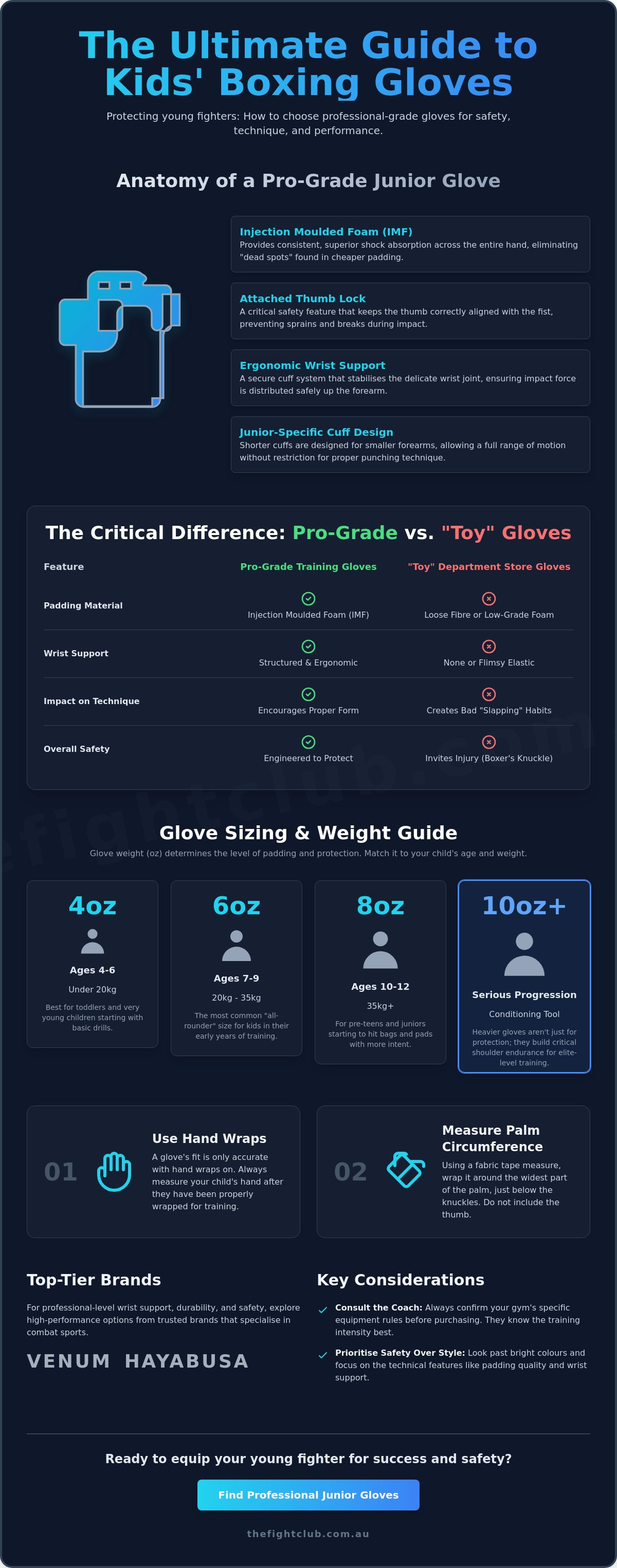
A legitimate junior glove focuses on three pillars: padding, wrist support, and lining. Look for Injection Moulded Foam (IMF). It's consistent and lacks the "dead spots" found in cheaper alternatives. The cuff design is equally vital. A shorter cuff is necessary for smaller forearms to allow for a full range of motion. If the cuff is too long, it restricts the wrist and prevents the punch from landing correctly. An ergonomic junior fit is the precise alignment of the fist with the wrist. This alignment ensures impact force travels safely through the forearm rather than rattling the joint. Choose gear that works with their body, not against it.
Understanding Kids Boxing Glove Sizes and Weights (oz)
In the gym, "oz" isn't just a unit of measurement. It's a safety standard. When you look for kids boxing gloves for training, you'll see numbers like 4oz, 6oz, or 8oz. These represent the weight of the padding inside the glove. More ounces mean more foam between your child's knuckles and the target. It's about impact distribution, not just how the glove fits the hand. In junior gear, manufacturers often use "size" and "weight" interchangeably, but the weight is what dictates the level of protection.
Selecting the wrong weight can lead to fatigue or injury. Following USA Boxing safety equipment principles ensures young athletes aren't over-burdened by gear that's too heavy for their frame. However, every gym has its own rules. Always consult your child’s coach before making a final purchase. They know the intensity of the sessions and will have specific requirements for what's allowed on the mats.
Weight Chart by Age and Body Weight
Choosing the correct weight is a balance of age, body weight, and training goals. Use these benchmarks to find the right starting point:
- 4oz: Best for toddlers and young children aged 4-6. Generally suited for those weighing under 20kg.
- 6oz: The "all-rounder" for kids aged 7-9. Ideal for weights between 20kg and 35kg.
- 8oz: For pre-teens (ages 10-12) or any junior athlete hitting punching bags with real intent.
As your child moves into the 10oz range, they're moving into serious conditioning. Heavier gloves aren't just for protection; they build the shoulder endurance required for longer rounds and more complex drills.
How to Measure Your Child’s Hand for the Perfect Fit
A glove that's too loose is a liability. It causes friction and fails to support the wrist during impact. To find the right fit, grab a fabric tape measure. Wrap it around the circumference of the palm, just below the knuckles. Do not include the thumb in this measurement.
Always measure with hand wraps on. You wouldn't buy running shoes without socks; don't buy gloves without accounting for the wraps. If the measurement falls between sizes, go up to the larger weight. It's easier to secure a slightly larger glove with a tight wrap than to force a hand into a compartment that's too cramped. For a deeper comparison of how these junior sizes stack up against adult gear, see our guide on Boxing Gloves Australia.
Ready to gear up? You can browse our professional youth range to find the perfect fit for your next session.
Essential Features for Youth Hand Protection and Durability
Stop looking at the colours. Start looking at the foam. When selecting kids boxing gloves for training, the internal tech matters more than the external branding. You need gear that survives the grind of the heavy bag and the heat of partner drills. High-performance junior gloves use Injection Moulded Foam (IMF). Unlike layered foam that can shift or settle over time, IMF is a single piece of protection moulded into the shape of a fist. This ensures consistent shock absorption across the entire striking surface. It eliminates "dead spots" where a thin layer of padding could lead to a bruised knuckle or a fractured hand.
Heat is the enemy of durability. High-intensity sessions turn gloves into moisture traps. Look for breathable mesh palms. This feature allows airflow to circulate during the workout, which manages heat and significantly reduces moisture build-up. Dry gloves last longer. They also stay hygienic. Without proper ventilation, the lining degrades and the glove begins to smell. A well-ventilated glove is a sign of professional-grade design, not a commercial gimmick.
Synthetic vs. Leather: What Lasts Longer?
High-grade synthetic leather (PU) is often the superior choice for younger athletes. It's resilient. It's easy to clean. A simple wipe down with a damp cloth after training keeps the exterior from cracking. PU gloves also have zero "break-in" time. They're flexible right out of the box, which is vital for smaller hands that might struggle to close a stiff, genuine leather glove. Save the investment in genuine leather for competitive teens. Once a fighter hits with enough force to stress synthetic materials, the durability of leather becomes necessary. Until then, focus on the quality of the PU and the density of the internal padding.
The Importance of Wrist Stabilisation
Children are prone to "rolling" their wrists. Their forearm muscles are still developing. Their technique isn't always perfect. When they hit a heavy bag with a loose wrist, the joint collapses under the impact. This leads to immediate strain and long-term injury. A wide hook-and-loop (Velcro) strap is the solution. This closure system acts as a splint. It bridges the gap between the hand and the forearm, keeping the joint aligned during every strike. Kids boxing gloves for training must feature a secure, rigid strap that mimics the support of professional hand wraps. A glove is only as safe as its wrist support. If the strap is flimsy, the glove is useless. Look for a closure that requires effort to pull tight. That tension is what keeps your child in the fight and out of the physio's office.
Training Progression: From Heavy Bags to Partner Drills
Growth in the gym follows a specific rhythm. Your child starts by hitting the bags to learn the mechanics. Eventually, they move to partner drills to learn timing. This progression requires a shift in gear. Traditional "bag gloves" are often stiffer, designed to withstand thousands of high-impact repetitions without the padding shifting. Conversely, all-purpose kids boxing gloves for training offer a more rounded profile. They provide the versatility needed to transition from solo bag work to controlled technical drills with a partner. Respect the process. Don't rush into contact before the fundamentals are locked in.
As your child’s strength increases, so should the weight of their gloves. Moving to a 10oz glove is a milestone. It’s not just about extra protection; it’s about conditioning. Heavier gloves build the shoulder endurance required to keep the guard up in the final minute of a round. This "oz progression" is a ladder. You start light to focus on speed and move up to build power and stamina. Your coach is the final authority here. They see the technique every day. They decide when a junior fighter is ready to step up in weight or move from the bag to the mats.
Essential Add-ons: Hand Wraps and Mouth Guards
Gloves are only half the equation. Hand wraps are non-negotiable for anyone hitting a bag. They stabilise the small bones in the hand and provide an extra layer of wrist support that even the best gloves can't match on their own. Discipline starts with the small things. Wrapping hands before every session builds a professional mindset. Safety doesn't stop at the wrists. Even during non-contact drills, an accidental elbow or a slipped punch can happen. Ensure your child wears a high-quality mouth guard to protect their smile and stay in the fight. Professional standards are set on day one, not when they turn pro.
Hygiene and Maintenance: Keeping Gear Fresh
Don't let your gear rot. Sweat is a silent killer for boxing equipment. If you leave damp kids boxing gloves for training in a gym bag overnight, the padding will degrade and the smell will become permanent. Follow this 3-step routine after every session to keep gear fresh:
- Wipe: Use a damp cloth to remove sweat and salt from the exterior PU or leather.
- Open: Pull the hook-and-loop straps all the way back to expose the inner lining to the air.
- Dry: Place the gloves in a cool, shaded area with high airflow. Never leave them in direct sunlight.
Use glove deodorisers or cedar bags to pull moisture from the deep padding. This simple habit extends the life of the gear and shows respect for the training environment. No one wants to clinch with the kid whose gloves smell like a locker room.
Ready to upgrade your junior fighter's kit? Shop the full range of professional youth gear and get the right protection for the next level of training.
Top-Tier Brands for the Next Generation of Fighters
Buying kids boxing gloves for training isn't a casual purchase. It's a commitment to your child's physical safety and their development in the sport. Don't buy gear from a place that also sells tennis balls and yoga mats. General sports retailers stock "fitness" gloves that lack the internal architecture required for real impact. Specialist fight stores curate gear based on technical performance. Brands like Venum and Hayabusa don't just shrink adult models. They re-engineer them for junior biomechanics. Quality gear is an investment in your child’s passion. It shows them that their hard work deserves professional-standard protection.
Venum Kids: Style Meets Substance
Venum leads the market because they refuse to compromise on junior specs. The Venum Elite and Challenger junior ranges are built with the same DNA as their professional counterparts. These gloves utilise high-density foam to ensure every strike is dampened before it reaches the knuckles. The signature bold designs aren't just for show. They create a sense of identity and pride in the gym. For a deeper look at the brand's history and tech, explore our Venum Australia guide. When a child pulls on a pair of Venum gloves, they aren't just playing. They're training like the pros.
Hayabusa offers a different but equally vital advantage: elite-level wrist stabilisation. Their youth-adjacent sizes often incorporate the same patented splinting technology found in the adult Hayabusa T3 Boxing Gloves. This design is critical for juniors who lack the forearm strength to keep their wrists straight under heavy impact. It provides a rigid support system that prevents injury and reinforces proper punching form from day one. Precision engineering. Professional standards. Zero excuses.
Why The Fight Club is the Destination for Junior Gear
We don't do fluff. We don't do "toy" gear. At The Fight Club, we provide a curated selection of the world's best combat brands. Our environment is humble and ego-free. We’re here to help parents cut through the marketing noise and find the gear that actually works. We understand that every young fighter’s journey is personal. We provide the tools to help them push past their limits safely. Whether you need Venum Elite Boxing Gloves or Hayabusa T3 Headgear, we stock the equipment that stands up to the grind of a real training hall.
Don't leave your child's safety to chance. Get the gear that matches their work ethic. Shop the full range of kids boxing gloves today and set the standard for the next generation of Australian fighters.
Set the Standard for Every Session
Protecting a young fighter's future requires more than just showing up. It requires gear that respects the sport and the athlete's developing body. You now understand that legitimate kids boxing gloves for training must offer professional-grade wrist support and high-density Injection Moulded Foam. These aren't just technical details; they are the baseline for safety in a high-intensity environment. By choosing premium brands like Venum and Hayabusa, you're investing in your child's discipline and long-term health. Don't settle for department store toys that compromise technique and invite unnecessary injury.
We've expertly curated a range of gear that meets the highest standards of the combat world. Our selection focuses on maximum safety and durability, ensuring your child stays protected from the first bell to the final round. Benefit from our no-nonsense approach and Australia-wide fast shipping on all premium equipment. Equip your young champion with the best kids boxing gloves at The Fight Club.
The road to mastery is built on hard work and the right equipment. Make sure they have the tools to push past their limits with confidence. Keep them safe. Keep them grounded. Keep them training.
Frequently Asked Questions
What ounce (oz) boxing gloves should I buy for a 7-year-old?
A 6oz glove is the standard weight for most 7-year-old athletes. This size provides enough padding to protect their knuckles during heavy bag work without being too heavy for their developing shoulders. If your child is smaller than average, a 4oz glove might be necessary to ensure they can maintain proper form. Always consult with their coach to see if the gym has specific weight requirements for their junior sessions.
Can my child use MMA gloves for boxing training?
No, MMA gloves are not suitable for dedicated boxing drills. Boxing requires the full knuckle protection and rigid wrist stability found only in kids boxing gloves for training. MMA gloves are designed for grappling and have minimal padding, which is inadequate for the repeated high-impact strikes of a boxing class. Using the wrong gear increases the risk of hand fractures and wrist strain. Stick to boxing-specific equipment for bag work and sparring.
How do I know if my child’s boxing gloves are too big?
You know gloves are too big if your child’s hand shifts inside the compartment or the wrist strap cannot be tightened securely. A proper fit should feel snug, especially when wearing hand wraps. If the glove rotates on the hand during impact, it is a liability. Oversized gear leads to poor technique and injuries because the hand isn't properly aligned with the padding. The glove should feel like a natural extension of the arm.
Do kids really need to wear hand wraps under their gloves?
Yes, hand wraps are non-negotiable for any junior fighter hitting a bag or pads. They protect the small bones in the hand from the shock of impact and provide a base layer of wrist support. Wrapping hands before every session builds a professional, disciplined mindset. It prevents the wrist from rolling and ensures the hand stays compact inside the glove. Safety starts with the wraps, not just the gloves.
How long do kids boxing gloves typically last?
High-quality junior gloves typically last between 6 and 12 months. The lifespan depends on training frequency and how well you maintain the gear. If your child is in the gym three times a week, the internal foam will eventually compress and lose its shock absorption. Once the padding feels "flat" or the wrist support loses its rigidity, it is time to replace them. Regular maintenance like drying them out after every session will extend their life.
Is it better to buy leather or synthetic gloves for a beginner?
High-grade synthetic (PU) gloves are usually the better choice for beginners. They are flexible right out of the box, making it easier for smaller hands to form a proper fist without fighting stiff material. Synthetic leather is also easier to clean and maintain after a sweaty session. Save the investment in genuine leather for when your child moves into competitive stages where the extreme durability of leather becomes necessary under higher impact forces.
What is the difference between junior boxing gloves and adult small sizes?
Junior gloves feature a shorter cuff and a narrower hand compartment designed for youth proportions. Adult small sizes often have a longer cuff that can restrict a child’s elbow movement or interfere with their guard. Kids boxing gloves for training are engineered specifically for youth biomechanics. This ensures the fist aligns correctly with the wrist, which is vital for preventing injuries and developing correct punching mechanics from day one.
How can I stop my child’s boxing gloves from smelling?
Stop the smell by removing the gloves from the gym bag immediately after every session. Open the straps fully and place them in a well-ventilated area to air out. Use moisture-wicking deodorisers or cedar bags to pull sweat out of the internal padding. Never leave damp gear in a closed bag overnight. Bacteria thrive in dark, moist environments. Once the odour settles into the foam, it is nearly impossible to remove, so stay on top of hygiene.