

Home Boxing Gym Setup: The Ultimate Guide to Professional Training at Home
Your garage isn't a storage unit; it's a battleground waiting to happen. Most athletes think a professional home boxing gym setup is just hanging a bag and hoping for the best. Then they realise they've wasted money on flimsy gear that snaps under pressure or triggered a noise complaint from the neighbours. You don't need a commercial licence to train like a pro, but you do need a space that respects the craft. Authenticity starts with a foundation that can handle four times the static weight of your bag to ensure total structural safety and peak performance.
We agree that training at home shouldn't mean compromising on intensity or technical discipline. You want a durable training space that stands up to every power shot without wrecking your house. This guide will show you how to build a battle-ready gym using expert layout strategies designed for high-octane results. We'll cover everything from spatial clearance and flooring to the elite kit list, including Cleto Reyes gear and heavy-duty punching bags, to ensure your home setup delivers the mental clarity and professional performance you demand.
Key Takeaways
- Map out the exact footprint and ceiling height needed for fluid footwork and skipping. Don't guess; measure your space for safe, unrestricted movement.
- Build a professional home boxing gym setup by selecting authentic gear like Hayabusa or Cleto Reyes to protect your hands and boost performance.
- Prioritise structural integrity by using mounting hardware rated for dynamic loads. Ensure your ceiling joists can handle the force of every power shot.
- Optimise every 45-minute session with high-octane drills and essential maintenance to keep your equipment battle-ready for the long haul.
- Swap standard tiles for high-density flooring that handles rapid pivots and explosive movements without slipping or failing under pressure.
Defining Your Space: The Blueprint for a High-Octane Home Boxing Gym
A home boxing gym setup is more than just a place to sweat. It is a dedicated combat zone. You aren't just clearing out the garage; you're reclaiming a territory for discipline and technical growth. Most people fail because they treat their training area like a storage unit with a bag. That ends now. To train like a professional, you must build a space that respects the boxing training fundamentals. This starts with a layout that allows for explosive movement, proper ventilation to save your gear, and a mindset that leaves the ego at the door.
Assessing Your Training Zone
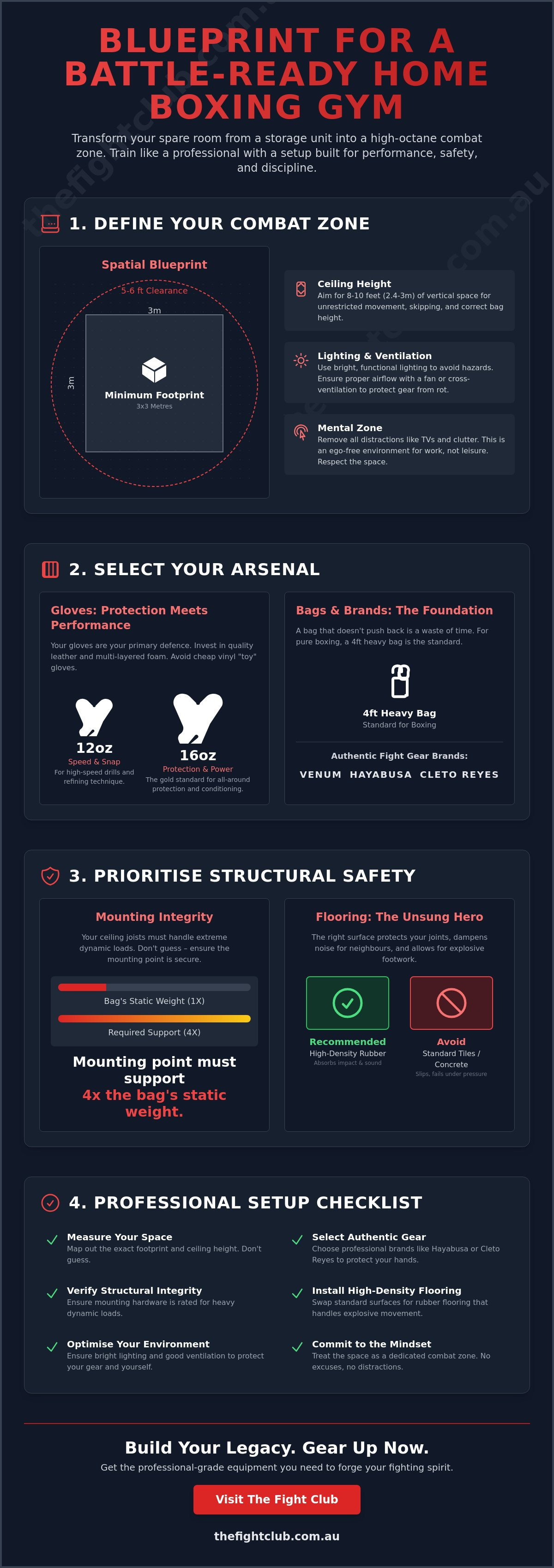
Space is your first opponent. You need room to breathe, pivot, and strike without hitting a wall or tripping over junk. Aim for a minimum footprint of 3x3 metres. This provides enough clearance to move 360 degrees around your heavy bag. Safety standards require 5 to 6 feet of clearance on all sides of the bag to account for dynamic swing. If you're mounting to a ceiling, verify the height first. You need 8 to 10 feet of vertical space to ensure your rope doesn't snag and your bag hangs at the correct eye level. Check your structural beams; the mounting point must support at least four times the static weight of the bag to handle the force of your power shots. If you share a wall with neighbours, consider high-density rubber flooring to dampen the vibration of every heavy impact.
Don't ignore the environment. Stagnant air is the enemy of leather and longevity. Without proper airflow, your gloves and wraps will harbour bacteria, leading to gear rot and a foul-smelling "dungeon." Install a high-velocity fan or ensure cross-ventilation. Lighting should be bright and functional. Dimly lit corners lead to sloppy footwork and hidden hazards. You need to see every inch of the floor to maintain technical precision during high-intensity intervals.
The Mental Shift: From Spare Room to Combat Zone
Strip away the vanity. A professional training hall isn't about mirrors or aesthetic decor; it's about work. Remove the distractions that pull you back into "home mode." No TVs, no clutter, and no excuses. This is a humble, ego-free environment where the only thing that matters is the round clock and your output. When you step into this space, you're no longer in your house. You're in camp. Establishing a "no-excuses" entry protocol, like wrapping your hands before you even cross the threshold, signals to your brain that the session has begun. If you want to perform like an elite athlete, you need the right MMA gear and a layout that demands your absolute focus. Respect the space, and the space will respect your progress.
The Essential Arsenal: Selecting Professional-Grade Gear
Most beginners make the mistake of buying "starter kits" from big-box retailers. It is a trap. These flimsy sets offer zero wrist stability and foam that bottoms out within weeks. If you are serious about your home boxing gym setup, you need gear that absorbs the impact so your bones don't have to. Professional-grade equipment isn't about vanity. It is about longevity. You can't train if your carpal bones are shattered or your wrists are chronically inflamed. High-octane performance requires tools that can withstand the grind of daily power shots.
Authenticity isn't a buzzword; it's a safety requirement. We stock brands like Venum and Cleto Reyes because they are forged in the fires of real combat. This isn't fitness gear. It is fight gear. When you are throwing hundreds of punches a session, you realise quickly that substance beats flash every time. You need to trust that your equipment won't fail when you're pushing past your limits.
Choosing the Right Gloves: Protection Meets Performance
Your gloves are your primary line of defence. For heavy bag work, 12oz gloves allow for high-speed intervals and help you refine your snap. However, if you want all-around protection and conditioning, 16oz gloves are the gold standard. They force your shoulders to work harder and provide a massive cushion for your knuckles. Look for Hayabusa T3 Boxing Gloves if you want world-leading wrist support. Their dual-strap system locks the joint in place, preventing the common "folder" injury during fatiguing rounds. Avoid "toy" gloves made of cheap vinyl. Stick to multi-layered foam and genuine leather to ensure your hands stay battle-ready.
Heavy Bags and Speed Balls: The Foundation of Power
A bag that doesn't push back is a waste of time. For pure boxing, a 4ft heavy bag is standard. If you plan on integrating Muay Thai or low kicks, you need the 6ft "banana" bag. Investing in a high-density punching bag is the only way to develop "heavy" hands. Cheap bags often develop hard spots or sag at the bottom, which can lead to shin or hand injuries. To sharpen your timing, add a floor-to-ceiling ball to the mix. It moves faster than any opponent. It teaches you to keep your hands up and your chin tucked. Splurge on the bag and the gloves. You can save on apparel, but never compromise on the gear that connects you to the target. For those ready to level up, sourcing professional combat gear is the first step toward a legitimate home training legacy.
Structural Integrity: Flooring, Mounting, and Safety
Your home boxing gym setup is only as strong as its weakest link. You can own the best gloves in the world, but if your flooring slips or your bag bracket rips out of the wall, your training is over. This isn't about aesthetics. It's about structural survival. You're building a zone where high-intensity movement meets heavy impact. Every component must be rated for the violence of a professional workout. Don't cut corners on the foundation of your fight cave.
Combat-Ready Flooring: Protecting Joints and Equipment
Standard gym tiles are for yoga, not combat. When you're throwing a cross, your lead foot needs to pivot with precision. Cheap mats often grip too much and torque your knee, or they're too slick and send you sliding. You need high-density rubber or EVA foam that balances traction with mobility. This flooring protects your joints from the repetitive shock of footwork drills and saves your gear from the hard concrete. Stay away from carpet. It's a breeding ground for bacteria, traps odours, and causes brutal friction burns during explosive movements. Keep the space professional. Use moisture-resistant materials that are easy to wipe down after a high-octane session.
Mounting Solutions: Wall Mounts vs. Freestanding Frames
The bag doesn't just hang; it fights back. A 45kg bag generates massive dynamic force when swinging. Safety protocols dictate that your mounting point must support at least four times the static weight of the bag to handle these forces. Wall-mounted brackets are the superior choice for stability and space. They allow for 360-degree movement and keep the floor clear. If you're renting or lack structural beams, a heavy-duty freestanding frame is your only viable path. Regardless of the mount, use a heavy-duty spring between the bracket and the bag chain. It absorbs the vibration and stops the noise from rattling the entire house. This small addition prevents hardware fatigue and keeps the neighbours happy.
Training solo means you're your own safety officer. Inspect your hardware before every session. Check the D-shackles for wear and ensure the bolts haven't vibrated loose from previous rounds. Organise your gear to maximise your training window. When the bag isn't in use, ensure you have a way to tether it or move it aside to keep the floor clear for shadowboxing. A professional environment is an orderly one. It reflects the discipline required for the sport. Respect the equipment, maintain the structure, and focus on the work.
Optimising Your Regimen: Solo Training and Gear Maintenance
Your home boxing gym setup is a temple of discipline, not a place for casual cardio. Once the hardware is bolted down, the real battle begins against complacency. Solo training demands a higher level of mental fortitude because there is no coach to call you out when your hands drop. You must become your own drill sergeant. Structure your sessions with the same intensity you would find in a professional camp. Every round has a purpose. Every movement must be deliberate.
Integrity starts with the basics. Never hit the bag without hand wraps. It doesn't matter if it's a "light" session. The repetitive impact on unprotected small bones in the hand leads to chronic injuries that can sideline you for months. Wrapping your hands is a ritual. It signals the transition from home life to combat mode. It is the first step in a "no-excuses" protocol that defines a serious athlete.
Maximising the Heavy Bag: Drills for Discipline
A professional session lasts 45 minutes of pure focus. Start with 10 minutes of skipping to prime your central nervous system and build the "gas tank" required for high-level combat. Follow this with ten 3-minute rounds on the bag, separated by 60 seconds of active recovery. Focus on technique over raw power. Professionals know to "touch the bag, do not push it." Pushing the bag creates a false sense of distance and ruins your timing. Keep the bag snapping, not swinging. Use this time to refine your footwork and head movement as if the bag is firing back.
Don't skip the small details. Wear mouth guards even during solo bag work. It isn't about protecting your teeth from the leather; it's about conditioning your body to breathe under stress. Learning to manage your oxygen intake while your jaw is clenched is a technical requirement that many home trainers ignore. If you don't practice breathing at home, you'll gas out in the first minute of a real spar.
Gear Longevity: Cleaning and Storage Protocols
Your equipment is an investment in your health. Respect it. Never leave sweat-soaked gloves in a gym bag overnight. This is the fastest way to ruin high-grade leather and breed bacteria. Use glove deodorisers and ensure they air dry in a well-ventilated spot. Wipe down your punching bags and floor mats with a non-corrosive disinfectant after every single session to maintain a professional standard of hygiene. Stagnant sweat leads to gear rot, which compromises the padding and protection of your kit.
Perform a hardware audit once a month. Inspect your mounting brackets, D-shackles, and bolts for any signs of fatigue or loosening. The dynamic forces of a heavy bag session are relentless. Catching a loose bolt early prevents property damage and keeps your training on track. If you're ready to kit out your space with the world's best equipment, shop our professional fight range today and start building your legacy from the ground up.
Building Your Legacy with The Fight Club Gear
Legacy isn't a word you throw around lightly. It's the result of every round, every drop of sweat, and every technical adjustment made in the quiet of your own space. Your home boxing gym setup is the physical manifestation of your dedication. It represents a commitment to the grind that most people will never understand. To honour that commitment, you need equipment that matches your intensity. You need gear that doesn't just survive the workout but thrives in it. A proper home boxing gym setup is the foundation of your technical evolution.
Why Professional Gear Matters for Home Use
Cheap gear is a mental block. It feels like a toy. It breaks, it slips, and it eventually kills your motivation. Professional gear does the opposite. It inspires confidence. When you lace up a pair of Hayabusa T3s or pull on a UFC Authentic Fight Night Walkout Hoodie, you feel the weight of the sport. The philosophy is simple: buy once, buy right. Investing in Venum Australia craftsmanship means you are choosing tools designed by fighters for fighters. This isn't about vanity. It's about respecting the craft enough to use the right tools for the job. High-grade leather and multi-layered foam are the only things standing between your hands and a season-ending injury.
Sourcing Authentic Brands Nationally
We are 100% Australian-owned. We understand the local fight scene because we are part of it. The Fight Club is the premier destination for MMA gear because we reject the superficial. We stock global giants like Cleto Reyes, Hayabusa, and Venum because they represent the gold standard of authenticity. You don't have to wait for international shipping to get world-class protection. We provide the kit you need with the speed and reliability the Australian combat community demands. Join the community of athletes who choose substance over flash and performance over pretension.
This is a humble, ego-free environment. Whether you're a seasoned pro or just starting your journey, the requirements remain the same: hard work and humility. Your home gym is where the real work happens when no one is watching. It's where champions are forged before they ever step into the lights. Build your space. Secure your gear. Start the grind. The legacy starts today.
Claim Your Territory: Start the Grind Today
Building a professional home boxing gym setup isn't about vanity. It's about creating a dedicated combat zone where technical progress and raw effort meet. You've mapped out the 3x3 metre footprint. You've secured the structural mounting points. Now, you need the tools that can handle the intensity. Don't settle for flimsy retail gear that fails when the pressure is on. Authenticity is the only currency that matters in this space.
By choosing professional brands and following a disciplined round-based structure, you transform a spare room into a high-octane training hall. Respect the craft. Protect your hands. Maintain your gear. The environment you build dictates the level of athlete you become. As an official retailer of Hayabusa, Venum, and UFC gear, we provide the authentic kit required for elite performance. We are Australian owned and operated, offering fast shipping across Australia so you can stop planning and start working.
Gear up and build your home combat zone at The Fight Club. The work is hard. The progress is earned. Every round counts. We'll see you on the bag.
Frequently Asked Questions
How much space do I really need for a home boxing gym?
You need a minimum footprint of 3x3 metres to train effectively. This area provides enough clearance to move 360 degrees around your heavy bag without hitting walls or furniture. Ensure your ceiling height is at least 8 to 10 feet. This vertical space is essential for hanging the bag at eye level and allowing enough room for skipping rope drills without snagging.
Can I hang a heavy bag in my garage without damaging the structure?
You can hang a bag safely if you mount it to a structural beam or joist rated for the load. The mounting point must support at least four times the static weight of the bag to handle dynamic forces. Many garage rafters require reinforcement before they are battle-ready. Use a heavy-duty bracket and a spring to absorb vibrations and protect your home's integrity.
What is the best flooring for a home boxing setup?
High-density rubber or EVA foam mats are the superior choice for a home boxing gym setup. These materials offer the perfect balance of grip for pivoting and shock absorption for your joints. Avoid using carpet or thin yoga mats. They lead to friction burns and don't provide the stability required for explosive footwork and high-octane movement.
Do I need a mouth guard if I am only training on a bag at home?
You should wear a mouth guard even when training solo. It isn't just for dental protection; it's a technical tool that teaches you to breathe under physical stress. Clenching your jaw while moving helps you manage oxygen intake and conditions your body for the realities of combat. Don't build bad habits by leaving your jaw loose during heavy bag rounds.
How do I stop my heavy bag from making too much noise?
Install a heavy-duty compression spring between the bag chain and the mounting bracket. This component absorbs the vibrations that usually travel through the ceiling joists and walls. You can also use a floor tether to limit the bag's swing and prevent it from banging against the frame. High-density flooring will also help dampen the thud of your footwork during intervals.
Is it better to buy a freestanding bag or a hanging bag for home use?
Hanging bags are the professional standard because they allow for natural movement and 360-degree footwork. They teach you how to manage distance and time your strikes against a swinging target. Freestanding bags are a useful alternative for renters or those without structural beams. However, they often lack the density and feedback required for developing true power and technical precision.
How do I clean my boxing gloves to stop them from smelling?
Wipe the exterior with a damp cloth and use glove deodorisers to absorb internal moisture after every session. Never leave sweat-soaked gloves in a gym bag. This creates a breeding ground for bacteria and gear rot. Always air dry your kit in a well-ventilated spot away from direct heat or sunlight to keep the leather supple and the padding intact.
What weight boxing gloves should I use for home bag work?
Select 12oz gloves for speed and technical drills, or 16oz gloves for maximum protection and conditioning. The 16oz option is the gold standard for a home boxing gym setup because it provides a massive cushion for your knuckles during power sessions. Always wear hand wraps underneath. They are the only way to lock your wrist in place and prevent chronic impact injuries.