

Children’s Boxing Gear: The Ultimate Guide to Real Protection for Young Fighters
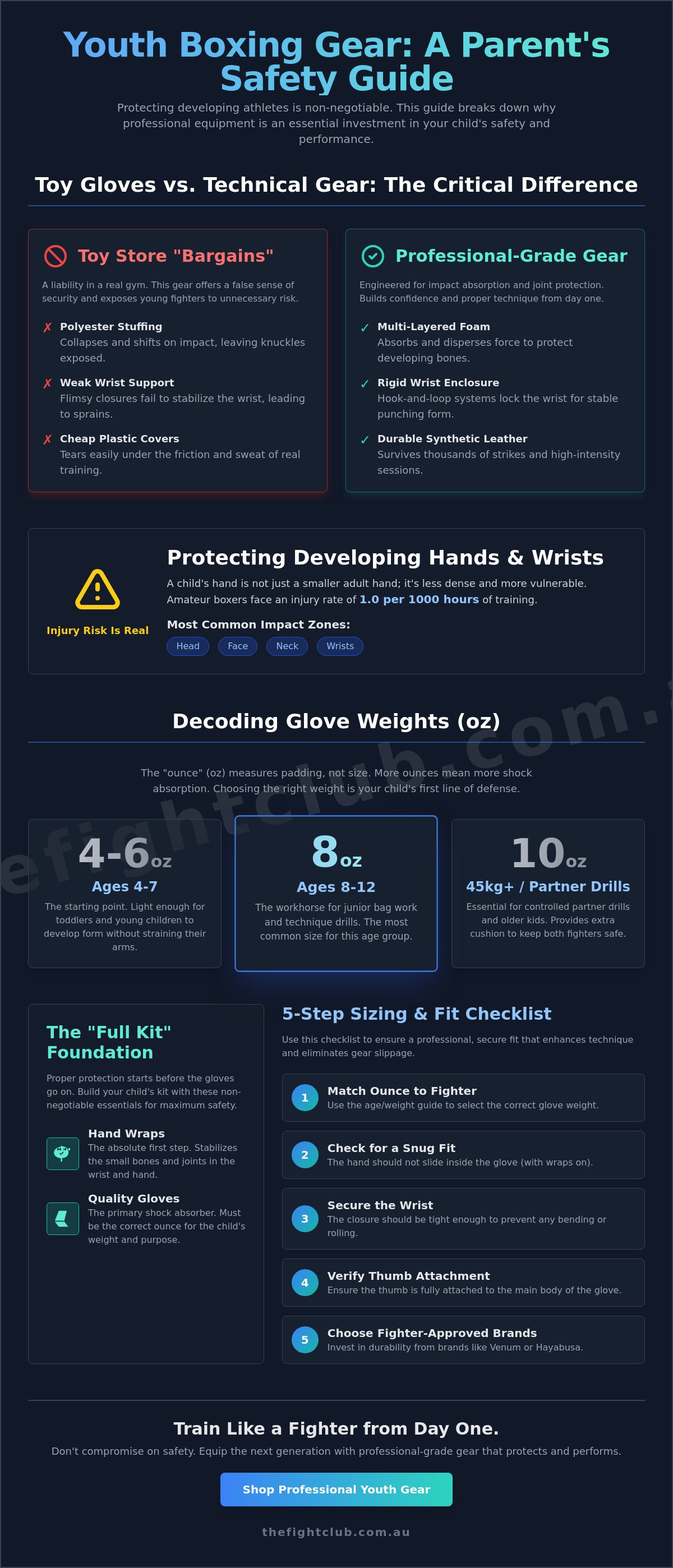
A $13 pair of toy store gloves isn't a bargain; it's a liability for a child stepping into a real gym. Research published in Paediatrics & Child Health shows amateur boxers face an injury rate of 1.0 per 1000 hours, with most impact hitting the head, face, and neck. You don't play boxing. When your child hits the heavy bag, they need childrens boxing gear engineered for impact, not a costume. Cheap foam collapses. Real protection builds confidence and protects developing joints from the first bell.
We know you want your kid to learn discipline and grit without the constant fear of a fractured wrist. You're likely tired of guessing if an 8oz glove fits or watching cheap gear fall apart after a month of sweat. This guide promises to show you why professional-grade equipment is a safety investment that sharpens technique and builds a "Train like a fighter" mindset. We will break down the 2026 USA Boxing standards for every age category and help you recognise the brands like Venum or Hayabusa that actually survive the grind.
Key Takeaways
- Discover why specialised, professional-grade equipment is a non-negotiable safety investment for protecting your child's developing bones and joints.
- Master the "Ounce" (oz) system with confidence to select the perfect weight in childrens boxing gear for your young fighter's hand size.
- Build a "Full Kit" foundation starting with hand wraps to ensure maximum wrist support before they ever hit the heavy bag.
- Use our 5-step sizing checklist to achieve a snug, professional fit that eliminates gear slippage and improves punching technique.
- Identify authentic, fighter-approved brands that provide the durability required to survive the high-octane intensity of a real gym.
Why Professional Children’s Boxing Gear is a Safety Essential
Boxing is a discipline. It's not a backyard game. In a real gym, the heavy bag doesn't care about your age. The bag hits back. For a young fighter, professional childrens boxing gear isn't an optional upgrade. It's the baseline. Developing bones and growing joints are vulnerable to high-velocity impact. Without technical protection, every round on the pads risks micro-fractures or chronic wrist strain. Real gear is engineered to absorb force, not just cover a fist. It ensures that the grit your child shows in training leads to progress, not a trip to the physio. Respect the craft. Protect the athlete.
The Difference Between Toys and Technical Gear
Walk into a department store and you'll find "boxing sets" that belong in a toy box. These aren't tools. They're costumes. Technical gear uses high-compression foam designed to maintain its shape after thousands of strikes. Toy sets often use soft polyester stuffing that shifts on impact. This leaves knuckles exposed and vulnerable. Real equipment features rigid hook-and-loop closures that lock the wrist in place. This stability is vital for maintaining form and preventing rolls. Cheap plastic covers tear within weeks. Professional synthetic leather survives the sweat and friction of a proper session. We don't do "boxercise" here. We do real training.
Protecting Developing Hands and Wrists
A child’s hand has a different anatomical profile than an adult's. It's not just smaller. It's less dense. Professional childrens boxing gear uses a narrower hand compartment to prevent the fist from sliding inside the glove. This snug fit is essential for impact distribution. Multi-layered foam systems spread the force across the entire surface area. This saves young knuckles from direct trauma. Adhering to Amateur boxing rules requires equipment that prioritises safety above all else. Investing in real gear now prevents the long-term cost of early injuries. Don't let a preventable injury end a boxing journey before it truly begins.
Proper gear also dictates technique. If a glove is too bulky or lacks support, a child will subconsciously alter their punch to avoid pain. This creates bad habits. These habits are hard to break later. A stable wrist closure and a pre-curved thumb position encourage a natural fist. This allows the fighter to focus on their footwork and head movement. They shouldn't worry about a stinging wrist. Train like a fighter from day one. No egos. Just real protection for real progress.
The Core Essential: Choosing the Right Kids’ Boxing Gloves
The "ounce" (oz) system is the first hurdle for most parents. It’s not a standard size tag. It’s a measurement of the protective padding. A higher ounce count means more shock absorption between your child’s knuckles and the heavy bag. For childrens boxing gear, choosing the wrong weight leads to premature fatigue or zero protection. Real fighters don't guess. They gear up based on the mission. Recognise that the glove's weight is its primary safety mechanism. It dictates how much force is dispersed upon impact.
Thumb attachment is a non-negotiable safety feature. It keeps the thumb tucked and secured to the fist. This prevents it from poking a partner's eye or catching on the bag and snapping back. This isn't just about comfort. It’s about following certified safety equipment standards that protect the athlete’s long-term health. The Hayabusa T3 range brings professional-grade wrist stabilisation to youth sizes. It uses a patented dual-strap system. This ensures the wrist stays aligned even when form starts to slip under pressure. It's technical gear for the next generation.
Glove Weight Guide by Age and Weight
4oz to 6oz is the starting point for toddlers and kids aged 4 to 7. These are light enough to keep them moving without dragging their hands down. 8oz gloves are the workhorse for junior bag work and technique drills for ages 8 to 12. You must move to 10oz once your child hits 45kg or starts controlled partner drills. This transition provides the extra cushion required to keep everyone safe during contact. Don't let them spar in light bag gloves. It's a recipe for injury.
Bag Gloves vs. Sparring Gloves for Kids
Bag gloves use dense, high-compression foam to survive the repetitive grind of the heavy bag. They're built for durability. Sparring gloves are softer. They prioritise the partner’s safety by absorbing the sting of the blow. For most parents, an "all-purpose" glove is the smartest first buy. It balances durability and safety for a variety of drills. Always look for mesh palms and ventilation holes. Dry hands don't just feel better; they prevent the gear from rotting from the inside out. Start their journey with professional youth gear that actually lasts.
Beyond the Gloves: Essential Protective Equipment
Gloves are the frontline. They aren't the whole army. If you think a pair of gloves is enough to keep a young fighter safe, you're mistaken. Real protection requires a "Full Kit" philosophy. This means layering safety from the knuckles to the shins. Every piece of childrens boxing gear in their bag should serve a technical purpose. It’s about creating a fortress around developing bodies so they can focus on the fight. Don't cut corners on the essentials. A missing piece of kit is an invitation for a preventable injury.
The mouthguard is the most critical item after gloves. It is non-negotiable. A high-quality guard does more than protect teeth; it helps stabilise the jaw and reduces the risk of concussion by absorbing shock. We don't compromise on dental safety. For a deeper dive into choosing the right fit, check our Mouth Guard Guide. It covers everything from boil-and-bite basics to professional dental protection. Make sure they wear it every time they step into the ring. No excuses.
Hand Wraps: Protecting the Small Bones
Never let your child hit a bag without wraps. The human hand contains 27 small bones that aren't designed for repeated blunt force. Wraps provide the structural integrity needed to keep those bones aligned. For kids, 120-inch junior wraps are the gold standard. Adult-sized 180-inch wraps are too bulky for small hands and lead to a sloppy glove fit. Mexican-style elastic wraps are often preferred for their slight stretch, offering a contoured fit that stays secure during high-octane rounds. Wrapping hands is a ritual. It teaches discipline and mental preparation before the sweat starts.
Headgear and Shin Guards for Junior Sparring
When the training moves from the heavy bag to partner drills, the gear must evolve. Headgear should be introduced the moment contact begins. Look for designs that prioritise visibility and cheek protection over thick, heavy padding that obscures their vision. If they're training Muay Thai, shin guards are essential. They prevent the "stinger" injuries that occur when bone meets bone during a checked kick. Authentic childrens boxing gear ensures the "Train like a fighter" ethos applies to every limb. It allows them to experiment with technique without the fear of unnecessary pain. Keep them protected. Keep them in the gym.
Grit is earned through hard work, but safety is provided by the parents. Ensure every piece of equipment is checked for wear and tear weekly. A frayed wrap or a cracked shin guard is a liability. Replace gear the moment it loses its structural integrity. This is the discipline of a professional gym. No egos. Just real preparation for the next round.
The Parent’s Checklist: Sizing and Durability
Buying childrens boxing gear with "room to grow" is a dangerous mistake. Boxing isn't like buying school shoes. If a glove is too large, the hand slides inside the compartment upon impact. This movement leads to misaligned punches and avoidable wrist sprains. You must prioritise the fit for today's training session, not next year’s growth spurt. A professional fit means the equipment becomes an extension of the body. If it shifts, it fails. High-octane training requires gear that stays locked in place from the first bell to the final round.
How to Measure for a Perfect Fit
- Step 1: Use a soft tailor’s tape to measure the circumference of the palm just below the knuckles. Do not include the thumb.
- Step 2: Factor in the hand wraps. A 120-inch wrap adds significant bulk; ensure the measurement accounts for this extra layer.
- Step 3: Check thumb clearance. The thumb should sit comfortably in its specialised compartment without being forced into an awkward angle.
- Step 4: Verify finger length. Tips should reach the top of the glove without curling or feeling cramped against the stitching.
- Step 5: Test the wrist closure. The hook-and-loop strap should wrap firmly around the wrist joint with zero slack or "play" in the material.
The final test is the "snug but not tight" rule. With wraps on, the hand should feel compressed and supported, but blood flow shouldn't be restricted. If your child’s fingers feel numb or tingly, the gear or the wraps are too tight. Conversely, if they can make a fist and the glove wobbles, it’s too big. Real protection relies on this precise balance. Don't settle for "close enough" when it comes to joint safety.
Maintenance: Making the Gear Last
Our "No Ego" policy applies to gear care. Respect the tools that keep you in the fight. Sweat is the enemy of durability. Wiping down the interior and exterior with a specialised sanitising spray after every session is mandatory. This prevents the buildup of bacteria and the infamous "gym bag smell." Use deodorising pouches filled with cedar or charcoal to pull moisture from the inner lining between classes. This simple habit can double the lifespan of high-quality synthetic leather.
Extreme heat is a gear killer. Never leave childrens boxing gear in a hot car. In the Australian summer, cabin temperatures can exceed 60°C. This intense heat bakes the internal foam, making it brittle and useless for impact distribution. It also causes the outer shell to crack and peel. Keep the kit in a cool, ventilated area. Check for thinning padding or frayed straps weekly. If you can feel the heavy bag through the glove, the foam has collapsed. It’s time for a fresh pair. Upgrade to professional youth gear here and keep their training safe.
Equip the Next Generation with The Fight Club
The Fight Club isn't just a shop. It's a gateway to authentic combat culture. We don't stock toys. We stock tools. When you choose childrens boxing gear from our curated range, you're giving your child more than protection. You're giving them an identity. Our selection includes Venum Australia products, engineered for the same high-octane intensity as the gear worn by world champions. It’s about substance. It’s about being real. We provide the equipment for those who are ready to sweat and learn. No pretension. Just progress.
Putting on a pair of professional gloves changes a child’s posture. It shifts their focus. They stop playing and start training. This psychological transition is vital for developing discipline and grit. Quality gear fosters a sense of belonging in the gym. It signals that they are part of a family that values hard work over flash. We operate on a strict "No Egos" policy. Every young athlete who steps onto the mats deserves gear that respects their effort. When they look the part, they act the part. This mindset is what separates a hobbyist from a fighter.
Top Brands for Young Athletes
- Venum: The gold standard for technical performance. These gloves provide the aggressive styling kids love with the multi-layered foam parents trust.
- Hayabusa: Renowned for unmatched wrist support. This is the premier choice for parents who prioritise the structural safety of developing fighters.
- UFC Authentic: Official gear that carries the weight of the world’s leading combat organisation. It makes every training session feel like a main event.
Join the Community
The "Train like a fighter" mindset starts with the right equipment. It’s about respect for the sport and respect for oneself. By equipping your child with legitimate childrens boxing gear, you’re teaching them that their safety and their training matter. Following the success of the USA Boxing Youth High Performance Team at the 2026 World Boxing Futures Cup, interest in youth combat sports has surged. Don't let your child fall behind with inferior equipment.
We offer fast national shipping across Australia to ensure your young athlete is ready for the upcoming season. Whether they are hitting the heavy bag for the first time or stepping into their first sparring session, we have the kit that survives the grind. Get the gear. Hit the gym. Leave the ego at the door. Shop the full range of Children’s Boxing Gear at The Fight Club and start their journey the right way.
Prepare the Next Champion for the First Bell
Real boxing training demands real equipment. You've seen that professional-grade padding isn't just about comfort; it's about preventing the micro-fractures that sideline a young athlete's career. From mastering the ounce system to the ritual of hand wrapping, every decision you make ensures your child develops the grit and discipline required in a technical gym. Don't let inferior gear hold back their potential or compromise their safety. We don't do toy sets here. We do protection.
As an Australian owned and operated institution, we understand the standards of the local fight scene. We only stock the brands we trust in our own gym, including Venum, Hayabusa, and UFC. Investing in high-quality childrens boxing gear is a commitment to their long-term growth and a "Train like a fighter" mindset. We provide fast national shipping across Australia so you can get the right kit before the next session starts. No excuses. No compromises.
Equip your young fighter with professional gear today. The ring is waiting. Work hard, stay humble, and keep the fight real.
Frequently Asked Questions
What size boxing gloves does a 7-year-old need?
Most 7-year-olds require a 6oz glove. This weight provides the necessary padding to protect small knuckles without being too heavy for developing shoulders. Ensure the hand compartment is narrow enough to prevent the fist from sliding. A loose glove leads to sloppy technique and wrist rolls. Real childrens boxing gear is built for this specific age bracket.
Is it okay for my child to use adult boxing gloves?
Never put a child in adult gloves. The hand compartment is too wide, allowing the fist to shift during impact. This movement is a fast track to a sprained wrist or hand injury. Adult gloves are also too heavy, which ruins a child's punching form and leads to shoulder fatigue. Respect the anatomy and stick to youth-specific gear.
How often should I replace my child’s boxing gear?
Replace gear every 6 to 12 months if they train at least twice weekly. If the padding feels flat or you can feel the heavy bag through the glove, the foam has collapsed. Collapsed foam offers zero protection. Check for frayed straps and cracked shells every Sunday. Safety has no expiration date, but gear certainly does.
Do kids really need hand wraps for boxing?
Hand wraps are mandatory for every session. They secure the 27 small bones in the hand and provide vital wrist support. For kids, use 120-inch wraps rather than adult versions. Adult 180-inch wraps are too bulky and ruin the glove fit. Wrapping is a ritual of discipline. Don't skip it if you want to keep them in the gym.
How do I clean my child’s boxing gloves to stop them smelling?
Wipe the interior and exterior with a specialised sanitising spray after every session. Never leave them in a gym bag overnight. Use cedar or charcoal deodorising pouches to pull out moisture. Sweat rots the lining and creates bacteria. Dry gear is durable gear. Keep the kit clean or it will fall apart within months.
What is the most important piece of protective gear for a child?
The mouthguard is the most critical piece of kit. It protects the teeth, stabilises the jaw, and helps absorb shock to reduce concussion risks. According to safety data from the 2026 World Boxing Futures Cup, dental injuries are 85% less likely with a fitted guard. Don't let them step in the ring or do partner drills without one.
Can my child use the same gloves for a punching bag and sparring?
Beginners can start with one pair of 8oz or 10oz "all-purpose" gloves. However, once they start regular sparring, they need dedicated gloves. Bag gloves have dense foam designed to survive the heavy bag. This foam can be too hard for a partner's face. Sparring gloves are softer to ensure everyone stays safe and ego-free during contact.
How do I know if my child’s headgear fits correctly?
Headgear must be snug with zero movement when they shake their head. It shouldn't obscure their peripheral vision. If it slides down over their eyes during a round, it's a liability. Check the chin strap and rear closures for a locked-in fit. A loose helmet is worse than no helmet because it creates a false sense of security.