

What to Wear for Your First Boxing Class: The Ultimate Beginner’s Gear Guide
Your first round starts before you even step through the gym doors. It starts with the gear you pack. Most beginners walk in with a knot in their stomach, terrified of looking out of place or mangling their wrists. You aren't alone in wondering what to wear for first boxing class to ensure you actually look like you belong. It is easy to get lost in the jargon of hand wraps and glove ounces. We understand that confusion. You want to focus on your technique, not on whether your shirt is soaking through or your knuckles are bruising.
This guide will strip away the fluff and give you the exact checklist needed to train with intent. We promise to help you master your first session with the apparel and protection required to train like a pro from day one. You will learn how to distinguish standard gym clothes from authentic fightwear and why technical gear like 16 oz training gloves is a non-negotiable for safety. Prepare to walk into the gym with the quiet confidence of someone who is ready to work. No vanity. No pretension. Just the right kit for the job.
Key Takeaways
- Ditch the cotton. Use moisture-wicking synthetics to manage heat and maintain your range of motion during high-intensity rounds.
- Know exactly what to wear for first boxing class to prioritise function over flash and walk in with professional confidence.
- Secure your foundation. Choose footwear with lateral stability to protect your ankles and maintain balance during footwork drills.
- Protect your hands. Always use wraps and training gloves to ensure bone alignment and maintain hygiene from the first bell.
- Handle the details. Trim your nails, remove jewellery, and fuel up 90 minutes before training to stay sharp and focused.
Stepping into the Ring: The Essentials for Your First Boxing Class
The sounds of leather hitting bags and the rhythmic skip of ropes can be intimidating. Don't let the noise distract you. When you are deciding what to wear for first boxing class, prioritising function over flash is your first win. This is a high-intensity environment. You will move in ways your body isn't used to. Your clothing must allow for a full range of motion while managing the massive amount of heat your body will generate. Leave the heavy hoodies and restrictive fabrics at home. You are here to work, not to put on a fashion show.
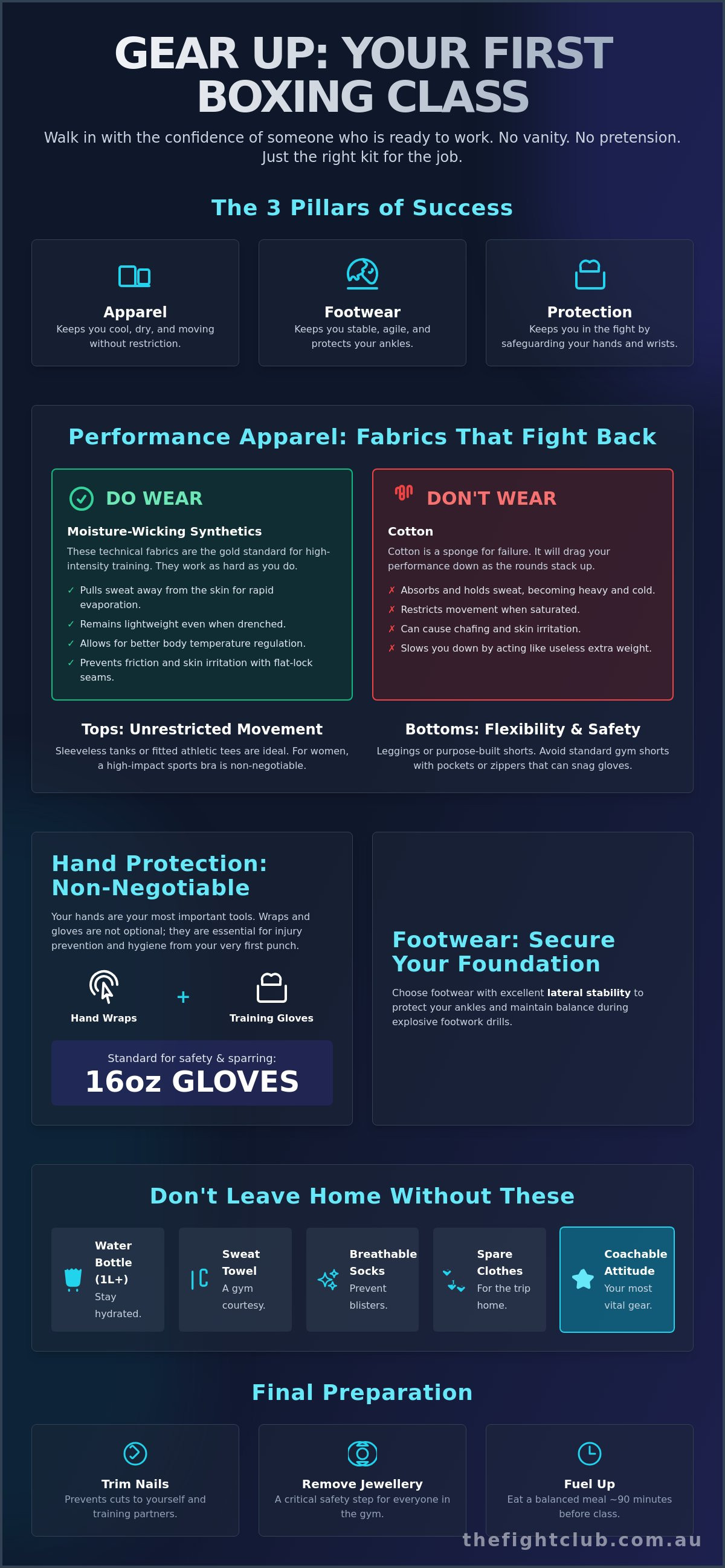
Success in the gym rests on three pillars: apparel, footwear, and protection. Apparel keeps you cool. Footwear keeps you stable. Protection keeps you in the fight. A solid beginner's kit is a strategic balance of your existing breathable gym wear and essential protective wraps. You don't need a professional's budget to start, but you do need professional standards of safety. For instance, Boxing gloves are worn over hand wraps to provide the necessary support for your small hand bones and wrist joints. Without this foundation, you risk injury before you've even learned to throw a proper jab.
The 'Ego-Free' Mindset
Authentic gyms value sweat over labels. Nobody cares if your gear is brand new or a few seasons old. They care about your effort. Prepare for the physical intensity because sweat is a guarantee. It is the currency of the training hall. Arrive at least 15 minutes early. This gives you time to meet the coach and get fitted for any rental equipment without rushing. Speed is for the rounds, not the preparation. Use this time to observe the culture and settle your nerves. Humility is your best asset when you're starting out.
Quick Checklist: Don't Leave Home Without These
Forget the bells and whistles. Focus on these essentials to ensure your session runs smoothly and you stay focused on the drills:
- Water bottle: Bring at least 1L. You will need every drop to stay hydrated during high-output intervals.
- Sweat towel: A dedicated towel is a courtesy to yourself and your training partners.
- Breathable socks: Fresh, moisture-wicking socks prevent blisters during heavy footwork and pivoting.
- Spare clothes: You will be drenched by the final bell. Have a dry change ready for the commute home.
- A coachable attitude: This is the most important gear you carry. Listen more than you speak and execute every instruction with intent.
Performance Apparel: Choosing Fabrics That Fight Back
Cotton is a sponge for failure. It absorbs sweat, hangs heavy, and drags your performance into the dirt as the rounds stack up. When you're deciding what to wear for first boxing class, you need fabrics that work as hard as you do. Synthetic moisture-wicking blends are the gold standard. They pull sweat away from the skin, allowing for rapid evaporation and better thermal regulation. If you're wearing a heavy t-shirt, you're essentially carrying extra weight that serves no purpose. Focus on technical gear that remains light even when the intensity peaks.
Friction is a silent energy thief. High-volume punching creates constant movement between your skin and your clothes. Look for flat-lock seams or seamless designs to prevent the skin irritation that can end a session early. Layering is also vital. A technical hoodie helps you break a sweat quickly during the warm-up, but you should shed it once the real work begins. Choosing professional Venum rash guards ensures you have a durable, breathable layer that won't bunch up or distract you mid-combination.
Tops: Unrestricted Movement
Boxing is a game of shoulder rotation. Your top must facilitate this movement without resistance. Many fighters prefer sleeveless tanks because they offer zero restriction at the joint. If you choose a tee, make sure it is a fitted athletic cut. Baggy fabric is a hazard. It can catch on your thumbs or obscure your view during head-movement drills. For women, a high-impact sports bra is essential. The explosive nature of boxing requires maximum support. Don't compromise on this. You need to focus on the target, not on gear failure.
Bottoms: Compression and Flexibility
Power starts in the floor and travels through your legs. Your bottoms must allow for deep squats and wide stances. Leggings are excellent for preventing skin abrasions if your session includes floor work or burpees. They also provide compression to help manage muscle fatigue. If you opt for shorts, they must be purpose-built. Standard gym shorts with pockets or zippers are dangerous in a boxing environment. A glove or finger can easily snag in a pocket, causing injury to you or your partner. Stick to streamlined Venum fight shorts to keep your movement clean and your training safe.
Footwear Fundamentals: Stability vs. Specialisation
Boxing is a game of inches played with your feet. Your hands deliver the message, but your foundation provides the power. When you're deciding what to wear for first boxing class, your choice of footwear can be the difference between a sharp pivot and a blown ankle. Most beginners make the mistake of rocking up in thick-soled running shoes. This is a mistake. Running shoes are engineered for forward movement and high-impact heel striking. In the ring, you need lateral stability and the ability to move side-to-side without the sole "catching" and rolling your ankle.
The "thick-sole" trap is real. Many beginners think more cushioning is better. In boxing, it's the opposite. Too much foam between your foot and the mat disconnects you from your centre of gravity. You want to be "heavy" in your stance but light on your toes. This contradiction is mastered through proper footwork. If you are still unsure about what to wear for first boxing class, look for the flattest athletic shoes you own. Avoid anything with a "max air" unit or excessive heel lift. You need to be flat to be stable.
A beginner-friendly shoe needs a flat profile and basic ankle support. You aren't just standing there. You are constantly shifting weight. Boxing requires pivoting on the ball of the foot, which requires specific sole traction that isn't overly aggressive. If your shoes have too much grip, your foot stays planted while your knee turns. That is a recipe for disaster. You need a sole that allows for a smooth rotation while still keeping you grounded.
Cross-Trainers: The Safe Middle Ground
If you don't want to invest in boots immediately, cross-trainers are your best bet. They are superior to running shoes for your first month because they are designed for multi-directional movement. They provide the lateral support necessary for shuffling and circling. Just ensure your laces are tucked in tight. A loose lace during a footwork drill isn't just a trip hazard; it's a distraction that breaks your focus. Keep it tight. Keep it secure.
When to Upgrade to Boxing Boots
As you progress, you will want to feel the floor. Dedicated boxing shoes offer ultra-thin soles that maximise power transfer from the ground up. You'll move faster and feel more connected to your stance. High-top boots offer maximum ankle support for those who need extra stability, while low-top versions allow for greater ankle mobility. Once you realise you're in this for the long haul, make the switch. It changes the way you move and the way you fight. Don't let your footwear hold back your footwork.
Hand Protection: Why Wraps and Gloves Aren't Optional
Your hands are your tools. They contain 27 small, intricate bones not designed for heavy impact without support. Ignoring protection isn't tough. It's reckless. When you decide what to wear for first boxing class, the layer closest to your skin is the most critical. Hand wraps serve a two-fold purpose. They lock your bones into alignment to prevent impact fractures and act as a vital hygiene barrier between you and the equipment.
Industry standards demand 180-inch Mexican-style wraps. The extra length allows you to secure the wrist, thumb, and knuckles properly. Short wraps often leave gaps where injury hides. If you need a tutorial on securing your foundation, check our boxing wraps guide. It is the first skill you must master before throwing a single punch. This is about more than just what to wear for first boxing class; it is about respecting your body and the craft.
Hand Wraps: The First Item You Should Own
Never slide your hands into rental gloves without your own fresh wraps. Rental gear is a breeding ground for bacteria and old sweat. Your wraps are your personal shield. Traditional cotton wraps offer the best custom fit and support, though they take a few minutes to apply correctly. If you're time-poor, quick-wraps with gel padding are an option, but they rarely provide the same level of wrist stability as a full wrap. Maintenance is simple. Toss them in a mesh laundry bag and wash them after every session. This prevents the "gym bag stench" from ruining your gear and your reputation in the training hall.
The Glove Dilemma: Rental vs. Buying Your Own
Most gyms provide rentals for your first session. Check them before you start. If the padding feels flat or the lining is torn, ask for another pair. Compromised padding means your knuckles take the hit directly. For those ready to commit, a 12oz or 14oz glove is the perfect all-rounder for bag work and technical drills. Investing in Hayabusa T3 gloves is a smart move for long-term wrist health. They feature world-leading support systems that "lock" the wrist in place. Don't let a cheap glove lead to a permanent injury. Protect your tools and buy professional boxing gloves to ensure you're training with the best protection from day one.
Final Preparation: Beyond the Apparel
The right kit gets you through the door. Your preparation keeps you in the room. Beyond knowing what to wear for first boxing class, you must manage the small details that often go overlooked by novices. Start with personal hygiene. Trim your nails short. Long nails are a hazard to you and your training partners during pad work or clinching drills. Remove all jewellery. Rings, earrings, and necklaces can snag on gloves or clothing, leading to avoidable injuries. This is a disciplined environment where safety is the priority. Respect the craft by being prepared.
Fuel your engine correctly. Eat a light meal approximately 90 minutes before the bell rings. Focus on complex carbohydrates and a small amount of protein to sustain your energy through high-intensity intervals. Hydration starts hours before you arrive, not when you're already gasping for air. Once the session ends, don't just dump your gear. Take your gloves and wraps out of your bag immediately. Air them out in a well-ventilated area to ensure they last for years. Damp gear is a breeding ground for bacteria and premature wear. Take care of your tools and they will take care of you.
The Hygiene Protocol
A towel is mandatory in any reputable Australian boxing gym. It is a sign of respect for the facility and your teammates. Wipe down the bags and the floor after your sets. Follow the "No Ego" rule. Being a good partner who controls their power is far more valuable than being a hard hitter who lacks discipline. If you have long hair, secure it in a tight style like French braids or a low bun. You don't want your vision obscured when you're trying to time a counter-punch. Focus on the target, not your fringe.
Gear Up at The Fight Club
Success is built on the right foundation. When considering what to wear for first boxing class, remember that your starter kit is simple: 180-inch wraps, a moisture-wicking tee, and solid trainers with lateral support. We support the Australian boxing community by providing professional-grade gear that stands up to the grind of authentic training. We don't do flash. We do substance. If you're ready to make the shift from fitness seeker to fighter, we have the tools you need. Browse our Beginner Boxing Collection and get ready to hit the bags with purpose. Your journey starts now. Work hard. Stay humble.
Step Into the Ring with Purpose
You've done the research. You now understand that what to wear for first boxing class isn't about vanity; it's about preparation and respect for the grind. Prioritise the three pillars of beginner gear. Choose moisture-wicking fabrics to manage the heat. Stick to flat-soled footwear for a stable foundation. Most importantly, never skip the 180-inch Mexican-style wraps to protect your hands. Leave the ego at the door and embrace the intensity. This is where your mental shift from spectator to fighter begins.
Don't settle for subpar gear that fails when the pressure is on. Gear up with Australia's best boxing equipment at The Fight Club. We are Australian owned and operated, stocking premium brands like Hayabusa and Venum to ensure you train with professional standards from day one. With fast shipping across Australia, you'll be ready for the first bell in no time. The bags are waiting. Walk in with confidence. Work hard. Stay humble.
Frequently Asked Questions
Can I wear normal running shoes to boxing?
Avoid wearing standard running shoes if possible. They are designed for forward motion and often have thick, high-grip soles that can cause ankle rolls during lateral movements. Boxing requires you to pivot and shift weight quickly. Flat-soled cross-trainers or dedicated boxing boots are much safer. They provide the floor feel and stability needed to move without catching on the mat.
Do I need to buy my own boxing gloves for the first class?
Check with your gym first as most provide rental gloves for newcomers. While rentals are fine for a trial, they often lack padding integrity and carry the sweat of previous users. If you've decided on what to wear for first boxing class and want to commit, buying your own 12oz or 14oz gloves is a smarter choice for hygiene and hand health.
What size hand wraps should a beginner buy?
Buy 180-inch Mexican-style hand wraps. This length is the professional standard for a reason. It provides enough fabric to wrap the wrist, thumb, and knuckles securely. Shorter 120-inch wraps often leave gaps in protection. The extra length ensures your 27 hand bones stay aligned during high-impact bag work. Don't compromise on your foundation; go for the full length every time.
Is it okay to wear a t-shirt and shorts, or do I need specific boxing gear?
Standard athletic wear is perfectly acceptable for your first session. Focus on moisture-wicking synthetics rather than heavy cotton. When you are planning what to wear for first boxing class, ensure your shorts don't have pockets or zippers that could catch a partner's glove. Professional fightwear like rash guards and fight shorts can be added to your kit as you progress in your training.
Should I wear a mouth guard for my first boxing class?
You won't need a mouth guard for a technique-focused beginner class that only involves bag work. However, if the session includes any partner drills or light contact, it becomes a non-negotiable piece of safety equipment. Most gyms require a mouth guard for any activity beyond hitting the bags. It is a small investment that prevents expensive dental injuries during explosive movements.
What should I eat before my first boxing workout?
Consume a light meal rich in complex carbohydrates about 90 minutes before the bell rings. A piece of fruit or a small bowl of oats provides the fuel needed for high-intensity intervals. Avoid heavy, fatty foods that slow down digestion. Boxing is a demanding cardiovascular workout; training on a full stomach often leads to nausea or severe cramping when the intensity peaks.
How do I stop my boxing gear from smelling after the first use?
Air your gear out the moment you get home. Bacteria thrive in the dark, damp environment of a closed gym bag. Take your gloves out and use moisture-absorbing inserts to dry the inner lining. Wash your hand wraps after every single use to prevent salt and sweat build-up. Keeping your gear dry is the only way to ensure it lasts for years without developing a permanent stench.
Do I need to wear socks with boxing boots?
Yes, always wear moisture-wicking athletic socks with your boots. Socks act as a friction barrier between your skin and the boot material. This prevents painful blisters from forming during constant footwork and pivoting drills. Choose a pair that rises above the collar of the boot. This prevents the edges of the footwear from rubbing against your shins or Achilles tendon during the workout.