

Jiu Jitsu Belts: The Ultimate Guide to BJJ Rankings and Progression
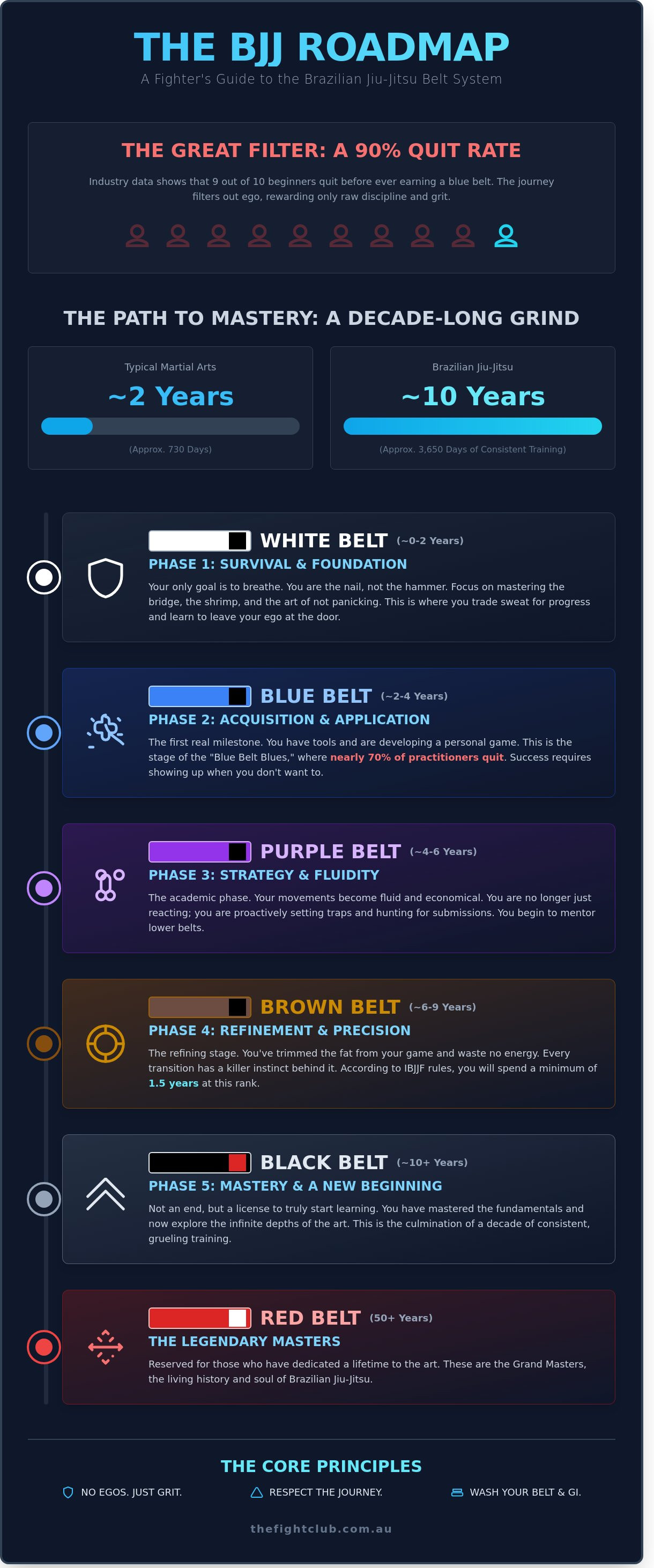
Industry data shows that 90% of white belts quit before they ever reach a blue rank. That's a staggering statistic that haunts every beginner who steps onto the mats for the first time. You're likely feeling that same pressure right now. You're wondering if you'll ever earn that first stripe or if you're destined to be a "forever white belt" who fades out after 180 days of hard rolls. It's a common fear. The hierarchy of jiu jitsu belts can feel like a closed book when you're just starting out.
You're here because you want clarity, not fluff. We're going to master the IBJJF roadmap together. This guide breaks down the grit required for every promotion and the unspoken rules of gym etiquette that keep the "No Egos" policy alive. We'll cover rank requirements, gym conduct, and how to pick a $75 belt that survives 500 rounds of sparring. It's time to train like a fighter. Let's get to work.
Key Takeaways
- Strip away the ego. Understand how the BJJ ranking system rewards raw discipline and grit over status.
- Decode the journey from white to black. Get a fighter’s perspective on what it takes to survive and thrive at every level.
- Earn your stripes. Learn the exact criteria coaches use to evaluate your technical proficiency and performance on the mats.
- Respect the journey and the gym family. Discover why washing your jiu jitsu belts is a non-negotiable rule for mat hygiene.
- Invest in gear built for the grind. Identify the durability markers that ensure your belt survives the toughest sparring sessions.
The BJJ Belt System: A Symbol of Grit and Discipline
BJJ isn't a participation trophy sport. It's a raw meritocracy. In many traditional martial arts, a student can secure a black belt in roughly 730 days. In BJJ, that timeline usually stretches to 3,650 days of consistent, grueling training. The Brazilian jiu-jitsu ranking system filters out the pretenders. We live by a "No Egos" policy. Your belt represents your willingness to get tapped out and get back up. It's about discipline. It's about grit. The International Brazilian Jiu-Jitsu Federation (IBJJF) acts as the global gatekeeper. They ensure a blue belt in Melbourne holds the same weight as one in Tokyo or Rio de Janeiro.
The Philosophy of the Grind
Stop counting months. Start counting rounds. Mat time is the only currency that carries value in this gym. You don't buy progress. You trade sweat for it. Jiu jitsu belts mark your personal evolution, not your status over others. It's a record of the nights you wanted to quit but stayed for one more roll. Your journey is yours alone. Comparison is a trap. Focus on the technique. The rank will follow the work. Train like a fighter, and the progress becomes undeniable.
IBJJF Standards and Global Consistency
The IBJJF keeps the game honest. They set the minimum age requirements and time-in-grade standards that most reputable gyms follow. This creates global consistency across the sport. The system splits at age 16. Consider these facts about the structure:
- Youth System: Includes 13 ranks for practitioners under 16 to track frequent development.
- Adult System: Consists of 5 primary belts before reaching the black belt level.
- Integrity: Standardised rules prevent "belt factories" from devaluing the rank.
While some coaches have unique criteria for stripes or promotions, the core path remains fixed. It's a universal language of skill. You can't skip steps. You can't hide on the mats. Every time you tie your jiu jitsu belts, you're wearing your history. It's a testament to every hour spent under the lights, sharpening your tools against resistance. This isn't just about a piece of dyed cotton. It's about the person you become while earning it.
The Adult Ranking Journey: Breaking Down the Colours
Earning jiu jitsu belts isn't a fashion statement. It's a map of your evolution. Each rank represents a shift in how you see the fight. You start as prey. You end as the predator. It's a decade-long grind that weeds out the weak and rewards the disciplined. There are no shortcuts here. Just sweat, technique, and the willingness to fail until you don't.
White and Blue Belts: The Foundation
White belt is pure survival. You're the nail, not the hammer. Your only goal is to breathe while a 100kg human tries to fold you into a pretzel. You master the bridge, the shrimp, and the art of not panicking. Blue belt is the first real milestone. You've got tools now. You're developing a personal game and hitting submissions. However, this is where the "Blue Belt Blues" hit. Statistics show that nearly 70% of practitioners quit at this stage. Success here requires showing up when you don't want to. It's about grit. If you want to test your mettle, join our Melbourne community where we leave the ego at the door.
Purple and Brown Belts: The Advanced Game
Purple belt is the academic phase. Your movements become fluid. You aren't just reacting; you're baiting traps. This is often where you start mentoring others. Brown belt is the refining stage. You've trimmed the fat. You don't waste energy. You understand the physics of leverage better than most engineers. Every transition has a killer instinct behind it. You aren't just collecting moves anymore. You're mastering the spaces between them. According to the IBJJF's official graduation system, you'll spend at least 1.5 years at brown before the ultimate promotion.
The Black Belt and Beyond
The black belt is a new beginning. It's a license to truly start learning. You've mastered the basics, now you explore the depths. It takes roughly 10 years of consistent work to reach this level. The path through the jiu jitsu belts is long, but the reward is a transformed mind. Beyond black, you earn degrees based on years of active contribution. The journey doesn't stop until you hit the legendary Red Belts. These are the masters who have dedicated 50 years or more to the art. They are the living history of BJJ. No egos. Just a lifetime of discipline. You're either moving forward or you're standing still. Choose the grind.
Stripes and Promotions: How You Earn Your Rank
You don't buy status on these mats. You bleed for it. Every one of the jiu jitsu belts wrapped around a waist represents a thousand rounds of struggle. Between those major milestones are stripes. These four pieces of athletic tape on your rank bar tell the story of your incremental growth. Coaches don't hand them out for just showing up. They look for three specific markers: technical depth, live sparring performance, and pure consistency.
The "No Egos" policy is the law here. If you ask your professor when your next promotion is coming, you've already failed the test. Asking for a belt is the fastest way to ensure you don't get one for another six months. Humility is a requirement. We value the "gauntlet" or "belt whipping" tradition in many old-school gyms. Walking the line while your teammates strike your back with their belts isn't about hazing. It's a rite of passage. It signifies that your progress belongs to the whole tribe. It's raw and it's real.
The Mechanics of Promotion
The path follows strict timelines. The Brazilian jiu-jitsu ranking system as defined by the IBJJF sets the minimum standards. A white belt usually grinds for 12 to 24 months before reaching blue. Once there, you must spend at least 2 years at blue and 1.5 years at purple. We track your mat hours religiously. If you aren't hitting at least 3 sessions every week, your skills will plateau. Competition is the ultimate validator. Registering for a local AFBJJ tournament might cost $100, but the data it provides your coach is priceless. A gold medal often accelerates a promotion because it proves your technique works against a stranger trying to break you.
The Role of the Professor
Only a certified black belt possesses the authority to change your rank. This isn't a retail transaction; it's a mentorship built on grit. Your professor sees the 5 AM rounds when the gym is cold and your body aches. They provide the "tough love" necessary to sharpen your steel. They aren't just looking at your armbar. They're looking at your character when you're trapped in side control. They see the discipline you bring to the jiu jitsu belts hierarchy. Train like a fighter, remain humble, and the rank will follow the work.
Belt Maintenance and Mat Etiquette: Respect the Journey
Forget the old-school myth that washing your belt washes away your "knowledge" or "spirit." That is not tradition; it is a biohazard. In a real combat sports family, hygiene is the ultimate form of respect. Your belt absorbs sweat, skin cells, and bacteria every time you step on the mat. If you aren't cleaning it, you are putting your training partners at risk. Professionalism starts with your gear. Treat your equipment with the same discipline you bring to your technique.
The Hygiene Manifesto
Skin infections like staph and ringworm are the enemies of progress. A 2023 report on gym safety indicated that 18% of grappling-related skin issues could be traced back to poorly maintained personal gear. Don't be that person. Wash your jiu jitsu belts after every single session. Use a cold wash cycle with mild detergent to preserve the fabric. Never use bleach; it destroys the integrity of the weave and fades your stripes. Always air-dry your belt. A high-heat dryer can shrink your belt by as much as 12cm, leaving you with gear that no longer fits.
Tying the Knot
A loose belt is a distraction. It creates a tripping hazard and interrupts the flow of a high-intensity roll. Most beginners start with the Standard Knot, which is functional and fast. However, the Super Knot, or Hollywood Knot, is the gold standard for security. It sits flat against the waist and rarely comes undone during a 10-minute sparring round. A flat knot also prevents unnecessary bruising when you are trapped in a heavy side control. Practice your knot until it becomes second nature. It is the first step in your daily ritual.
Respect the hierarchy of the mat. Never leave your belt on the floor. It represents your sweat, your grit, and your time. If it falls off during a roll, move to the edge of the mat to retie it quickly. This keeps the center clear for active sparring and shows awareness of your surroundings. At The Fight Club, we live by a "No Egos" policy. We respect the rank, but we value the work. Whether you are a white belt or a seasoned veteran, your conduct off the mat defines your reputation on it.
Ready to test your grit on the mats? Join our Melbourne community and start training like a fighter today.
Choosing the Right Belt: Durability for the Long Grind
Your belt isn't just a piece of fabric. It is a record of every sweat-soaked round and every hard-fought escape. Don't settle for gear that frays after three months of solid training. You need something built for the mat. High-quality jiu jitsu belts feature dense stitching and reinforced cores that hold their shape under pressure. Look for a belt that feels substantial in your hands. It should match the rugged quality of your BJJ Gi. If your Gi is built for war, your belt cannot be the weak link in your kit.
The difference between a "comp" belt and a "premium" thick belt comes down to personal preference and performance. Competition belts are typically thinner and lighter. They stay tied during explosive movements and high-intensity scrambles. Premium belts are heavy, stiff, and require a break-in period. These thick options offer a traditional feel that many veteran grapplers prefer for daily training. Both styles serve a purpose, but they must be durable enough to withstand the friction of 1,000 rolls.
Materials and Construction
Material choice determines how your belt ages over the years. 100% cotton is the industry standard because it's reliable and gains character as it fades. Hemp is a top-tier alternative, offering superior antimicrobial properties and extreme durability. Ripstop belts are the newest addition to the mats, designed to be lightweight and fast-drying. Every serious belt needs a dedicated black sleeve. This rank bar is where you earn your stripes, so it must be securely double-stitched to survive constant gripping. The ideal belt width is usually between 4cm and 5cm for IBJJF compliance.
Brands That Deliver
We don't stock gear that fails. At The Fight Club, we carry top brands like Venum and Hayabusa because they are engineered for the grind. Investing $30 to $60 in a professional-grade belt is a small price for something you will wear for years of training. These brands understand that jiu jitsu belts are symbols of discipline and grit. They don't just look the part; they survive the hardest rounds Melbourne can throw at them. Ready to start your journey? Grab your first BJJ belt and Gi here and get to work. No egos. Just results.
Own the Mat and Earn Your Stripes
The road from white to black belt takes most practitioners over 3,600 days of consistent training. It’s a journey defined by thousands of sparring rounds and endless repetitions. You now understand that jiu jitsu belts are more than just fabric; they’re a timeline of your discipline and technical growth. Respect the system by maintaining your gear and keeping your ego at the door. Whether you’re chasing your first stripe or preparing for a purple belt promotion, your equipment must match your intensity. We provide the tools for the job. Our collection features elite brands like Venum and Hayabusa, built to withstand the harshest sessions. We ship these professional standards Australia-wide to ensure every grappler has access to the best. No gimmicks. No egos. Just high-quality gear for those who show up. Stop making excuses and start building your legacy on the mats.
Shop Professional BJJ Belts & Gear
Step onto the mats with confidence. Your progression starts with the work you put in today. The fight is personal; make every second count.
Frequently Asked Questions
How long does it take to get a blue belt in BJJ?
It takes 18 to 24 months of consistent training to earn your blue belt. Show up three times a week. Put in the work. You need roughly 250 to 300 hours on the mats to understand the fundamentals. Don't rush the process. Your coach tracks your progress based on technique and grit, not just time served. Focus on the grind. The rank follows the sweat and the hours.
Can I lose my jiu jitsu belt rank if I stop training?
You don't lose your official rank if you step away, but your skills will fade. A belt is a permanent marker of your past achievements. However, returning after a 12 month break means your mat fitness and timing will be off. You'll feel like a lower rank until you regain your rhythm. Respect the mats. If you take a three year hiatus, expect to be tapped by hungry white belts until you shake the rust off.
Why do BJJ belts have a black bar on one end?
The black bar, or rank sleeve, exists to hold the stripes that mark your progress within a rank. Most jiu jitsu belts feature a 10 centimetre black section at one end. This is where your coach applies athletic tape to signify your advancement toward the next level. It’s a visual scorecard of your discipline. Without it, there's no clear way to track the small wins between major promotions.
What is the "Blue Belt Blues" and how do I avoid it?
The "Blue Belt Blues" refers to the high dropout rate where 70% of students quit after reaching their first promotion. The initial novelty wears off. The plateau hits hard. Avoid this by shifting your focus from the rank to the technique. Set three micro-goals per month. Focus on one specific guard pass or sweep. Remember our "No Egos" policy. Keep showing up. Consistency beats temporary inspiration every time.
Is there an age limit for earning a black belt in jiu jitsu?
You must be at least 19 years old to receive a black belt according to IBJJF standards. While there's no upper age limit, the journey usually requires 10 years of dedicated training. We've seen practitioners earn theirs at age 65. It’s about the miles on the mat and the depth of your technical knowledge. Age is just a number; discipline is a choice. Start now.
Should I buy my own belt or does the gym provide it?
Your coach typically provides your first belt during the promotion ceremony, but you'll buy replacements yourself. A quality cotton belt costs between $25 and $45 in Australia. Don't buy a high-rank belt online to look the part. You earn the right to wear it through sweat and sparring. If your current one wears out after 500 rounds, grab a new one from the pro shop.
How many stripes are on a jiu jitsu belt?
There are four stripes on each of the jiu jitsu belts before you move to the next colour rank. These white tape markers represent your technical proficiency and time on the mats. Each stripe usually requires 60 to 80 hours of active training. Once you hit that fourth stripe, you're on the radar for your next major promotion. It’s a roadmap of your evolution. Train like a fighter and the stripes will come.
What happens if I wash my BJJ belt and the stripes fall off?
If your stripes fall off in the wash, just ask your coach for more tape or replace them yourself. Always wash your belt. Old school myths say washing "washes away knowledge," but that's a lie that spreads staph and ringworm. Hygiene is non-negotiable in our family. Use 5 centimetres of waterproof athletic tape for the fix. Keep your gear clean. Respect your training partners by maintaining a sanitary kit.